Views: 0 Author: Site Editor Publish Time: 2026-05-28 Origin: Site
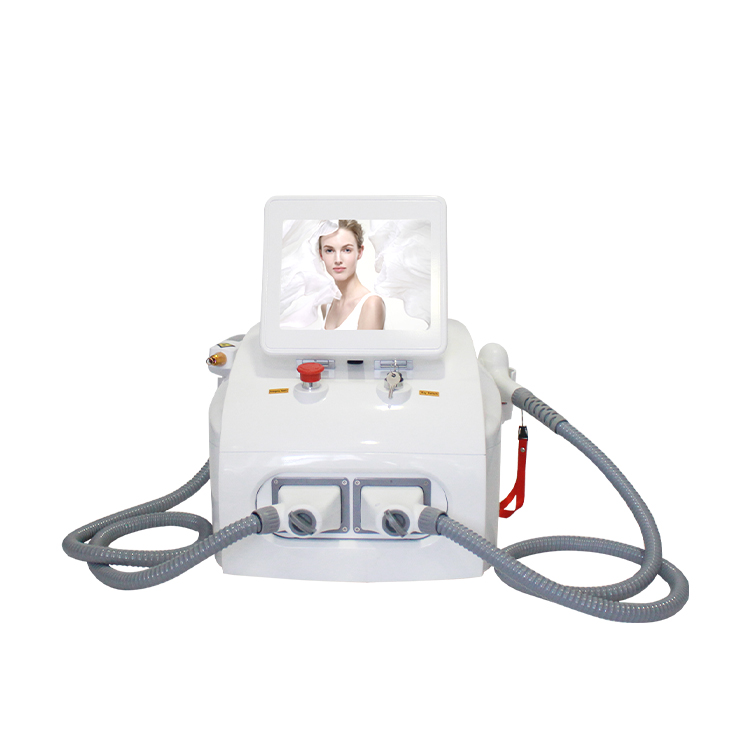
Modern medspas face a constant dilemma when scaling their operations. They must expand treatment menus to meet client demands without over-leveraging limited budgets or physical clinic space. Finding the perfect balance between clinical versatility and overhead often feels impossible for clinic owners. Enter the 2 in 1 laser machine. This technology represents a strategic consolidation of high-demand aesthetic services into a single footprint. By uniting disparate treatment modalities, clinics can maximize spatial efficiency and elevate their service offerings simultaneously. You need an objective, clinical, and business-focused framework before investing heavily in new capital equipment. In this guide, we provide exactly that. You will discover the critical metrics, operational realities, and core specifications needed to evaluate a diode YAG combined system thoroughly before finalizing procurement.
Space and Capital Efficiency: A combined aesthetic platform reduces upfront equipment costs and maximizes treatment room utility.
Clinical Capabilities: Pairs 808nm/810nm diode technology for high-speed hair removal with Q-switched or Picosecond Nd:YAG (1064nm/532nm) for tattoo and pigment reduction.
Operational Risks: Consolidating two modalities into one chassis introduces a single point of failure; robust warranty and rapid technical support are non-negotiable.
ROI Potential: Enables seamless cross-selling of the two most requested aesthetic laser treatments, accelerating equipment payoff.
Independent aesthetic lasers eat up valuable clinic space. They also require double the floor space when kept in separate treatment rooms. You must maintain dual maintenance contracts constantly. Initial capital expenditure skyrockets rapidly when buying individual premium devices. Clinic owners need smarter hardware solutions. We see a strong shift toward consolidation across the aesthetics industry today.
A dual function laser combines power supplies seamlessly into one chassis. It merges cooling systems and software interfaces beautifully. This consolidation delivers two distinct profit centers in one physical footprint. You capture the massive hair removal tattoo removal market simultaneously. Medspas operating in expensive retail environments benefit immensely from this spatial efficiency. You transform a single 100-square-foot room into a versatile, high-revenue suite.
This integration opens major cross-selling opportunities immediately. You can easily package diode hair reduction alongside YAG skin rejuvenation. You might pair body treatments alongside carbon peels or specialized facials. Pigment removal treatments blend perfectly into comprehensive patient treatment plans. This bundling strategy increases your lifetime patient value. It accelerates your return on investment significantly. We highly recommend mapping patient journeys around these combined packages to maximize daily revenue.
Evaluating a combined laser requires strict component scrutiny. The internal architecture dictates clinical success entirely. You must evaluate the two modules separately to ensure neither side compromises performance.
Modern systems rely on highly specific wavelengths. Standard units utilize 808nm diode technology perfectly for medium skin tones. Premium units offer tri-wavelength configurations. They emit 755nm, 808nm, and 1064nm simultaneously from a single handpiece. High wattage is absolutely crucial here. Look for minimum outputs around 1200W to ensure adequate follicle destruction. Fast repetition rates enable popular In-Motion technology protocols. In-Motion sweeping techniques treat large body areas quickly. Patients experience much less pain during these high-speed gliding motions.
Tattoo removal requires massive peak power instantly. You must choose between Q-Switched or Picosecond options based on your budget. Q-Switched delivers nanosecond pulses very effectively. Picosecond technology shatters ink faster but costs more. Both modules utilize specific wavelengths for different targets. You need 1064nm for dark inks. You need 532nm for red or warm inks. Many units include a 1320nm setting specifically designed for carbon facials. The module must generate sufficient mJ per pulse. It must successfully shatter ink particles without fail. It must avoid causing any thermal damage to surrounding tissue.
Here is a technical comparison chart outlining typical module metrics you should verify:
Metric | Diode Module | Nd:YAG Module |
|---|---|---|
Primary Application | Hair Reduction | Tattoo & Pigment Removal |
Core Wavelengths | 808nm or 755/808/1064nm | 1064nm, 532nm, 1320nm |
Action Mechanism | Thermal Bulk Heating | Photoacoustic Shattering |
Key Power Metric | Wattage (e.g., 1200W+) | Energy per Pulse (mJ) |
Delivery Method | In-Motion or Stamping | Precise Stamping |
Every piece of clinical equipment carries trade-offs. You must weigh the benefits against potential operational hazards before signing a contract.
Buying a combined aesthetic platform delivers immediate budget relief. It drastically reduces overall lifetime expenditure. You avoid buying two top-tier dedicated devices separately. Staff training becomes much simpler. Operators learn one unified operating system interface. They navigate shared software menus effortlessly. This standardization reduces operator errors during busy shifts. A single interface also makes onboarding new technicians faster and more predictable.
You should critically assess system vulnerabilities before purchasing. Combining modalities creates unique mechanical stresses inside the machine.
Single Point of Failure: Shared chassis design means shared downtime. If the unit requires internal repairs, you lose dual capabilities. The clinic cannot perform either treatment until fixed. We recommend having a backup device or strict loaner agreement.
Cooling System Strain: Back-to-back treatments generate massive heat. Running a diode YAG machine continuously demands superior internal cooling. You need active TEC, water, and air cooling working together. Inferior machines will overheat mid-treatment, forcing embarrassing delays.
Component Compromises: Manufacturers sometimes cut corners to lower prices. Ensure they maintain premium diode bar quality from reputable sources. Verify the YAG rod clarity remains flawless. Never accept downgraded internal components simply to fit a smaller price point.
You must filter vendors using strict clinical criteria. These technical specifications determine daily usability and long-term patient safety.
Patient comfort relies heavily on excellent contact cooling. Look for closed-loop Sapphire contact cooling on the diode handpiece. Sapphire tips draw heat away instantly from the epidermis. The machine needs active TEC (Thermoelectric Cooling) inside the main chassis. TEC enables continuous, stable operation. Robust TEC cooling allows 12+ hour operational days seamlessly without forced cooldown periods.
Versatility requires highly adjustable parameters. Diode handpieces need varying spot sizes or magnetic attachments. You need small tips for facial hair precision. You need massive tips for backs and legs to reduce treatment time. YAG handpieces require precise targeting capabilities. The YAG beam size must adjust smoothly between 1-10mm. This flexibility allows practitioners to treat dense ink saturation safely before moving to larger spot sizes.
Profitable clinics track their consumable expenses ruthlessly. Evaluate the guaranteed shot count deeply before purchasing. Knowing your hardware limits prevents sudden operational losses.
Component | Expected Lifespan (Shots) | Replacement Frequency Indicator |
|---|---|---|
Diode Laser Bars | 20+ Million | Drop in clinical efficacy or repeated calibration failure |
YAG Xenon Lamps | 1 to 5 Million | Weakened photoacoustic snap sound or visible energy drop |
Internal Water Filters | N/A (Time-based) | Change every 3 to 6 months per manufacturer guidelines |
Regulatory compliance protects your business reputation. Verify all FDA-clearances thoroughly if operating in the United States. Look for valid CE medical marks for European markets. Proper certifications ensure base safety standards. They satisfy strict liability insurance requirements perfectly. They protect you entirely during sudden regulatory audits.
Buying the machine represents only step one. Successful implementation requires a methodical clinic rollout strategy. You cannot simply plug it in and start booking patients.
Operators face a steep learning curve initially. They must master two entirely different energy modalities quickly. Diode hair reduction relies on thermal bulk heating to destroy follicles. YAG tattoo reduction relies on photoacoustic shattering to break apart ink. The visible skin endpoints look completely different. Your training curriculum must cover frosting effects for YAG and perifollicular edema for diodes. A common mistake is rushing this training. You should schedule at least two full days of supervised hands-on practice.
You must mandate strict maintenance protocols daily. Dual systems demand pristine upkeep.
Conduct routine distilled water changes monthly to prevent algae buildup.
Perform regular handpiece energy calibration checks before the first patient arrives.
Execute daily lens cleaning to prevent carbon debris burn-in on the YAG tip.
Inspect the cooling system flow rate weekly through the software diagnostic menu.
Check all umbilical cords for structural twisting or hidden kinking.
Proper upkeep prevents unexpected motherboard failures. It keeps your device firing optimally.
Filter manufacturers aggressively during your buying journey. Rule out vendors lacking comprehensive device protections. Demand a minimum 1-to-2-year comprehensive warranty covering parts and labor. Ensure they possess domestic repair capabilities in your country. Verify they offer active loaner programs during extended repairs. You cannot afford extended downtime waiting for overseas replacement parts.
Scaling medspa services efficiently requires incredibly smart technology investments. Integrating diode hair reduction and YAG pigment removal drives immense profitability. Mid-sized clinics benefit most from this brilliant spatial consolidation. Your final decision should hinge heavily on internal machine architecture. Prioritize advanced cooling system design above all else. Demand transparent clinical validation from the prospective manufacturer. Establish a reliable after-sales support infrastructure locally. We suggest you audit your current daily patient volume immediately. Calculate your baseline technical support requirements clearly. Request hands-on machine demos only after clarifying these operational benchmarks.
A: Yes, but protocols vary. The diode module safely treats Fitzpatrick Types I-IV, and sometimes V or VI if using longer pulse widths and aggressive cooling. The 1064nm Nd:YAG wavelength remains the true gold standard for treating darker skin types safely due to its much lower melanin absorption rate.
A: Efficacy depends entirely on internal components, not the shared chassis. High-wattage models featuring premium diode bars and pure YAG rods perform identically to top-tier stand-alone units. You must avoid entry-level models that sacrifice energy output simply to fit a smaller chassis.
A: Premium diode handpieces usually last for 20 to 40 million guaranteed shots before needing bar replacements. Nd:YAG handpieces rely on high-intensity xenon lamps. These lamps typically require replacement after 1 to 5 million shots depending on the specific energy levels used daily.
A: No. System power routing and internal safety lockouts prevent simultaneous firing. The software interface requires the operator to select one specific treatment modality at a time. This ensures perfectly stable energy delivery and prevents severe cooling system overload.