

Views: 0 Author: Site Editor Publish Time: 2026-04-20 Origin: Site
Investing in hair removal technology requires navigating past endless marketing hype. You must understand clinical efficacy, hardware reliability, and patient safety before making a major purchase. Clinics and high-end prosumers often struggle using outdated or flawed tools. IPL scatters light broadly across the skin. This scattered energy causes high discomfort and delivers highly inconsistent results. Meanwhile, extreme laser wavelengths present their own distinct clinical challenges. Nd:YAG hurts significantly during operation, while Alexandrite poses severe burn risks for darker skin types. Enter the Diode Laser Hair Removal Machine, operating exactly at the highly precise 808nm wavelength. Industry experts consider this specific technology the true commercial and clinical gold standard. It optimally balances deep melanin absorption alongside vital epidermal safety. By doing so, it allows practitioners to achieve verifiable, safe, and highly consistent permanent results. You will learn exactly how this technology works and how to evaluate hardware properly.
The 808nm Sweet Spot: Strikes the exact balance between 755nm (too shallow/risky for dark skin) and 1064nm (too deep/painful), effectively treating Fitzpatrick skin types I–IV.
Targeted Precision: Operates on a "sniper" mechanism compared to IPL's "shotgun" scatter, ensuring energy is absorbed safely by the hair follicle's melanin without damaging surrounding tissue.
The "Painless" Mechanism: True painless treatment relies heavily on integrated Thermoelectric Cooling (TEC) and Sapphire contact cooling systems, maintaining epidermal temperatures near 0°C (32°F) during operation.
Operational Reality: Achieving 90%+ clearance requires 6–8 sessions timed with the anagen (active) hair growth phase; success heavily depends on machine quality, patient selection, and operator proficiency.
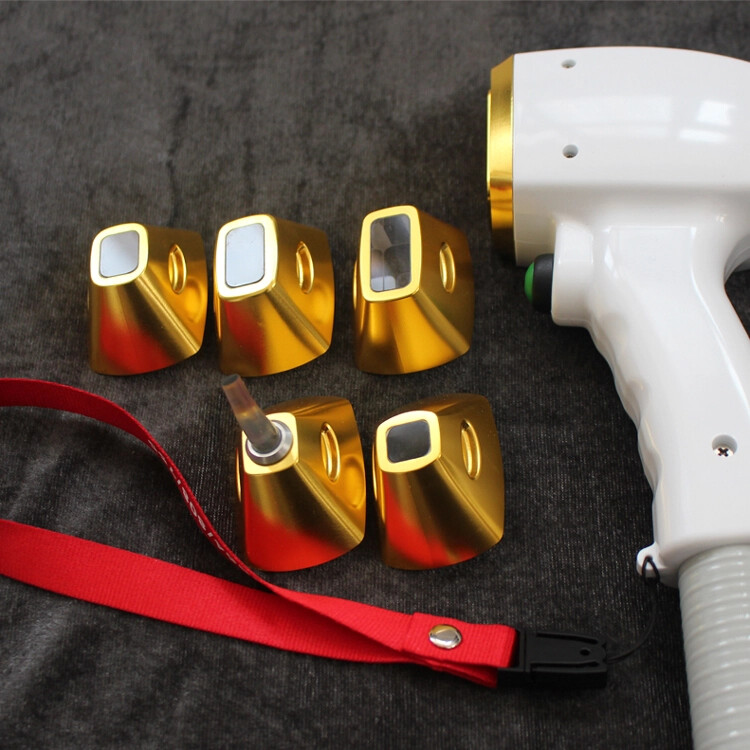
We must first define the exact penetration depth of the 808nm wavelength. It penetrates four to six millimeters deep into the human dermis. This specific depth directly reaches the hair bulb and the hair bulge. Critical stem cells reside in these exact locations. They control all future follicle growth. If you destroy them, you prevent regrowth.
Compare this specific depth to the older alternatives. Alexandrite lasers operate at 755nm. This shorter wavelength absorbs too rapidly into surface melanin. It risks causing severe burns on darker skin profiles. Conversely, Nd:YAG lasers operate at 1064nm. This wavelength penetrates deeply and remains exceptionally safe for deep skin tones. However, it struggles heavily when targeting finer hair. It also induces a much higher pain profile. The 808nm wavelength bridges this exact gap safely. It balances optimal absorption and profound epidermal safety.
Next, we must match the tissue's thermal relaxation time. This concept dictates how quickly a structure loses absorbed heat. An 808nm diode uses precisely calibrated pulse widths. They deliver intense heat to destroy the follicle quickly. They complete this action before heat escapes into the surrounding skin. The surrounding tissue remains completely unaffected. This specific temporal mechanism minimizes hyperpigmentation risks significantly. You protect the patient while achieving permanent hair reduction.
Finally, you must understand the anagen phase reality. Lasers only destroy hair during active growth. We call this the anagen phase. Only 15 to 20 percent of hair exists in this phase simultaneously. Other hairs rest in the catagen or telogen phases. Lasers cannot destroy resting follicles effectively. Therefore, you need multiple, spaced-out sessions. We consider six to eight treatments clinically mandatory. Set transparent expectations with every patient regarding this biological timeline.
We routinely compare energy delivery mechanisms using a simple analogy. We call Intense Pulsed Light (IPL) a "shotgun" approach. It uses a broad spectrum of light ranging from 500nm to 1200nm. This scattered light loses energy density very rapidly as it enters the skin. It hits everything but masters nothing. We define the diode laser as a precision "sniper". It projects a single, coherent, focused beam. It delivers up to 30 J/cm² of highly targeted energy directly into the hair root.
We see massive differences in clinical efficacy. IPL devices often require 10 to 12 or more sessions. Patients frequently report rapid, disappointing regrowth afterward. Contrast this against a true 808nm laser device. You typically need only four to six high-impact sessions. The focused beam creates permanent follicular destruction rather than temporary stunning.
Safety on darker tones matters greatly in modern clinics. IPL's broad spectrum increases burn risks substantially. Its scattered light catches surface melanin easily. It is especially dangerous for Fitzpatrick skin types III and above. Diode lasers offer far superior targeted safety. Let us review an 808nm laser hair removal performance comparison chart.
Feature Matrix | 808nm Diode Laser (Sniper) | Traditional IPL (Shotgun) |
|---|---|---|
Energy Spectrum | Single, focused 808nm beam | Broad spectrum (500nm - 1200nm) |
Energy Density | High (Up to 30+ J/cm²) | Low to Moderate (Often < 10 J/cm²) |
Typical Sessions Needed | 4 to 6 sessions | 10 to 12+ sessions |
Safety on Dark Skin | High safety profile | High risk of surface burns |
Regrowth Rate | Minimal (Permanent destruction) | High (Often just stuns the follicle) |
How do you evaluate a complex aesthetic machine? First, inspect the laser bar quality carefully. Internal component origins dictate the overall device lifespan. Top-tier machines utilize premium US or German coherent bars. They guarantee stable light emission over many years. You should always demand high shot counts from manufacturers. The commercial standard requires 20 million shots minimum. Many premium systems now offer up to 40 million shots before refurbishment.
Next, scrutinize the integrated cooling systems. They remain absolutely non-negotiable for delivering a painless treatment. Look for robust internal infrastructure beneath the casing.
Brushless DC Water Pumps: They provide high water velocity. Fast water flow removes heat from the laser bars rapidly.
Oversized Radiators: Large surface areas dissipate trapped heat effectively.
High-Speed Japanese Fans: They offer quiet operation alongside massive air displacement.
TEC (Thermoelectric Cooling) Plates: They chill the Sapphire handpiece actively using the Peltier effect.
This combined infrastructure maintains stable low temperatures perfectly. It keeps the treatment tip between 0°C and 5°C. This numbs the skin instantly upon contact. It safely allows continuous 24-hour operation in busy clinic environments.
Finally, assess the total power output and spot sizes. Higher wattage correlates directly to output stability. Look for systems rated between 800W and 3000W. They maintain stable energy at high firing frequencies without dropping power. Spot sizes dictate your daily treatment speeds. Large spots handle expansive backs and legs quickly. Standard spot sizes usually measure 15x30mm or 15x40mm. Smaller tips manage the upper lip and delicate facial contouring perfectly. See the specification guidelines below.
Component Type | Minimum Acceptable Standard | Premium Clinical Standard |
|---|---|---|
Laser Bar Origin | Generic OEM Coherent Bars | US/German Imported Bars |
Shot Lifespan | 10 Million Shots | 20 - 40 Million Shots |
Cooling System | Standard Water + Air | TEC Sapphire + DC Brushless Pump |
Machine Wattage | 800 Watts | 2000 - 3000 Watts |
We rely heavily on three specific pillars of clinical success. High-quality hardware represents simply the first step. You also need precise patient selection protocols. Finally, you require a highly experienced operator. They must adjust energy densities correctly based on real-time tissue feedback.
Patient selection constraints remain absolute. You must act completely transparently with your clients. The 808nm laser mechanism heavily relies on melanin absorption. It absolutely will not work on blonde hair. Grey and white hair also lack the necessary pigment completely. Refuse treatment on unpigmented hair to protect your clinic's reputation.
Follow a strict, standardized best-practice workflow. We outline the exact procedural steps below:
Consultation: Assess the patient's exact Fitzpatrick skin type. Review their medical history for photosensitizing medications.
Hair Preparation: Ensure proper surface shaving. Instruct patients never to wax or pluck for four weeks prior. The follicle root must remain intact.
Skin Cleansing: Cleanse the treatment area thoroughly. Remove all makeup, lotions, or sunscreens.
Gel Application: Apply a one to two-millimeter layer of clear cooling gel. It acts as a vital optical coupling agent. It also enhances epidermal cooling.
Execution Setup: Utilize modern "IN-Motion" sweeping techniques. Set your firing frequency to 10Hz.
Treatment Delivery: Keep the sapphire tip in constant motion. Safely build up cumulative heat in the dermis gradually. Never deliver painful, stationary "stamps" on the tissue.
You must troubleshoot adverse effects immediately. Hyperpigmentation and erythema sometimes occur during busy shifts. They usually result from incorrect fluence settings. Inadequate cooling also triggers these superficial skin issues. If the patient reports sharp pain, stop immediately. Adjust your energy parameters downward without hesitation. Verify the handpiece tip remains frosty cold. Always listen carefully to patient feedback during the session. Good operators watch the skin for mild perifollicular edema. We consider this slight swelling the perfect clinical endpoint.
The 808nm diode laser eliminates professional guesswork entirely. It offers the most reliable operational intersection available today. You get unparalleled speed, high patient comfort, and long-term clinical efficacy combined. Moving away from IPL scatter toward focused diode precision transforms patient outcomes dramatically. It replaces a painful ordeal with a smooth, highly tolerated experience.
Take actionable steps before committing to your next equipment upgrade. Advise your purchasing team to request detailed technical data sheets. Verify the exact origin of the internal laser bars carefully. Always confirm TEC cooling capabilities physically if possible. Demand clear warranty terms covering millions of shots. Secure these technical guarantees before finalizing any purchase or signing supplier contracts.
A: You typically need six to eight sessions. Space them four to eight weeks apart. The laser only destroys follicles actively growing in the anagen phase. Since hair grows in scattered cycles, multiple sessions ensure you treat every single follicle during its most vulnerable stage.
A: No high-energy device operates entirely sensation-free. However, machines equipped with high-grade TEC Sapphire cooling reduce the sensation massively. Patients feel a mild, highly tolerable warming or slight tingling. This advanced cooling virtually eliminates the sharp rubber-band snap associated with older laser models.
A: No, it does not. The laser specifically targets melanin inside the follicle. It proves highly effective on dark, coarse hair. Conversely, it remains completely ineffective on white, grey, light blonde, or red hair due to the distinct lack of target pigment.
A: A high-quality commercial machine utilizes premium laser generators. Manufacturers typically rate them for 20 million to 40 million shots. This massive capacity allows for years of heavy, daily clinical use before you ever need a handpiece refurbishment or replacement.


