Views: 171 Author: Site Editor Publish Time: 2026-07-02 Origin: Site
Vascular lesions affect up to 50% of adult women today, creating a massive market demand. Clinic owners and aesthetic practitioners constantly evaluate equipment to meet this growing need. Patients actively seek a reliable, non-invasive alternative to traditional sclerotherapy or vascular surgery. Enter the 980nm diode laser. It now stands as the clinical standard for superficial vascular clearance. The device relies on highly specific absorption by oxyhemoglobin. This targeted approach significantly minimizes epidermal damage while nearly eliminating patient downtime. You need predictable clinical results to build trust and scale your aesthetic practice. This comprehensive guide will break down the core clinical mechanisms and standard operating protocols. We will define clear treatment boundaries to ensure maximum patient safety. Finally, we will cover key procurement criteria for investing in a highly effective vein treatment machine.
Targeted Efficacy: 980nm wavelength offers peak absorption for oxyhemoglobin, efficiently closing superficial veins without damaging surrounding tissue.
Strict Clinical Boundaries: Highly effective for facial spider veins, cherry angiomas, and rosacea, but fundamentally contraindicated for deep leg veins where laser penetration is insufficient.
Evidence-Based Protocols: Success relies on step-by-step parameter tuning (e.g., starting at 4.0W/40ms) and precise execution (non-contact, 45-degree angle, constant movement).
Manageable Recovery: Typical clearing requires 2–4 sessions spaced 8–12 weeks apart; small veins metabolize in 12 weeks, while larger ones may take 6–9 months.
High ROI for Clinics: Commercial vascular treatment devices offer robust B2B value via zero consumable costs, 24/7 continuous operation capabilities, and multi-functionality.
Understanding the core science behind selective photothermolysis is crucial for safe clinical execution. The 980nm wavelength specifically targets porphyrin and oxyhemoglobin found inside red blood cells. Unlike broader light therapies, this wavelength penetrates the upper dermal layers to reach the vascular target directly. Melanin and water absorb much less energy at 980nm. This selective absorption ensures you can treat vascular lesions while protecting the surrounding epidermis.
The primary mechanism of action relies on thermal coagulation. As the laser fires, it converts light energy into localized heat. This rapid temperature increase creates controlled micro-damage along the capillary wall. The thermal energy forces the blood to coagulate instantly. It breaks the hemoglobin down into tiny molecular clusters. Over the following weeks, the patient's immune system naturally clears these clusters through macrophage activity. The vein collapses and fades from visibility.
Beyond clearing vessels, this technology provides a dual-action epidermal benefit. While you operate a vascular laser, the scattered thermal effect gently stimulates dermal fibroblasts. This stimulation boosts collagen production in the treated area. A thicker, denser epidermis helps conceal deeper micro-vessels, actively preventing future vein exposure. Patients often report improved skin texture alongside the reduction of redness.
To fully appreciate the clinical value, we must contrast this technology against traditional methods. Sclerotherapy involves injecting chemical irritants into the vessel. This older method carries risks of allergic reactions, causes severe injection pain, and requires uncomfortable post-treatment compression garments. The 980nm laser offers a minimally invasive alternative. Patients skip the needles, avoid systemic chemicals, and rarely need compression.
Chart: 980nm Laser vs. Traditional Sclerotherapy | ||
Feature | 980nm Diode Laser | Traditional Sclerotherapy |
|---|---|---|
Method | Non-invasive photothermolysis | Invasive chemical injection |
Pain Level | Mild snapping sensation | Moderate to severe injection pain |
Downtime | Minimal (mild redness/crusting) | Requires compression garments (days-weeks) |
Allergy Risk | Zero (light-based) | Potential reaction to sclerosants |
Achieving outstanding results requires knowing exactly when to use the device. The 980nm wavelength excels at specific superficial targets. Proper patient selection determines your clinical success rate. You must evaluate the depth, diameter, and location of the lesion before committing to a treatment plan.
When used correctly, the laser delivers rapid, predictable clearance. Here are the ideal indications where the technology performs exceptionally well:
Superficial facial capillaries: Fine red lines around the nose and cheeks respond instantly to the precise spot sizes.
Cherry angiomas and venous lakes: These localized vascular malformations, frequently seen in patients over fifty, coagulate beautifully under continuous or pulsed modes.
Rosacea symptom management: Diffuse facial redness improves significantly. The laser seals the hyperactive micro-capillaries causing the chronic flush.
You must also recognize strict limitations. The most critical boundary involves deep leg veins. Never attempt spider vein removal on deep varicose veins or reticular leg veins using this specific wavelength. The 980nm light penetrates approximately 1 to 2 millimeters into the tissue. Deep leg veins sit much further below the surface in the subcutaneous fat. Treating them with a surface laser risks severe epidermal burns without affecting the underlying vessel. Severe vascular cases strictly require surgical excision, endovenous laser ablation (EVLA), or specialized phlebology interventions.
Many modern clinics scale their service offerings by utilizing the multifunctional capabilities of these platforms. High-quality 980nm devices often support interchangeable handpieces. You can switch attachments to perform auxiliary treatments. Nail fungus removal is highly requested, as the laser heat effectively destroys fungal spores under the nail bed. Physiotherapy handpieces provide deep tissue warming for pain management. You can also use defocused beams for non-ablative skin rejuvenation and anti-inflammation protocols.
Clinical safety and efficacy depend entirely on your standard operating protocols. Following a rigid, evidence-based workflow prevents thermal injuries and ensures the vessel collapses completely. Preparation starts well before the patient enters the treatment room.
Pre-treatment preparation is mandatory. You must conduct a thorough medication review. Instruct patients to discontinue Aspirin, Ibuprofen, Naproxen, and herbal supplements like Ginkgo Biloba for at least one week prior. These substances increase bleeding risks and alter coagulation times. For skin prep, patients must strictly avoid tanning beds and direct sun exposure for four weeks. Apply a high-quality topical anesthetic cream 30 to 40 minutes before the procedure to maximize patient comfort.
Finding the optimal treatment parameters requires a cautious, logical approach. Because every patient has unique skin density and vessel depth, you must never use a "one size fits all" setting. Follow this numbered list to establish safe parameters using your 980nm laser:
Start conservatively: Set your initial power to 4.0W and pulse width to 40ms. This baseline works well for fair skin and fine, superficial veins.
Perform a test pulse: Fire a single pulse at the edge of the lesion. Observe the tissue response closely.
Apply incremental testing: If the vein does not blanch or shrink, increase your settings incrementally. Move to 4.2W and 50ms, then test again. Avoid large jumps in power.
Identify the clinical endpoint: Cease pulsing immediately when the vascular lesion turns white (blanches) or visibly shrinks. You have successfully coagulated the vessel.
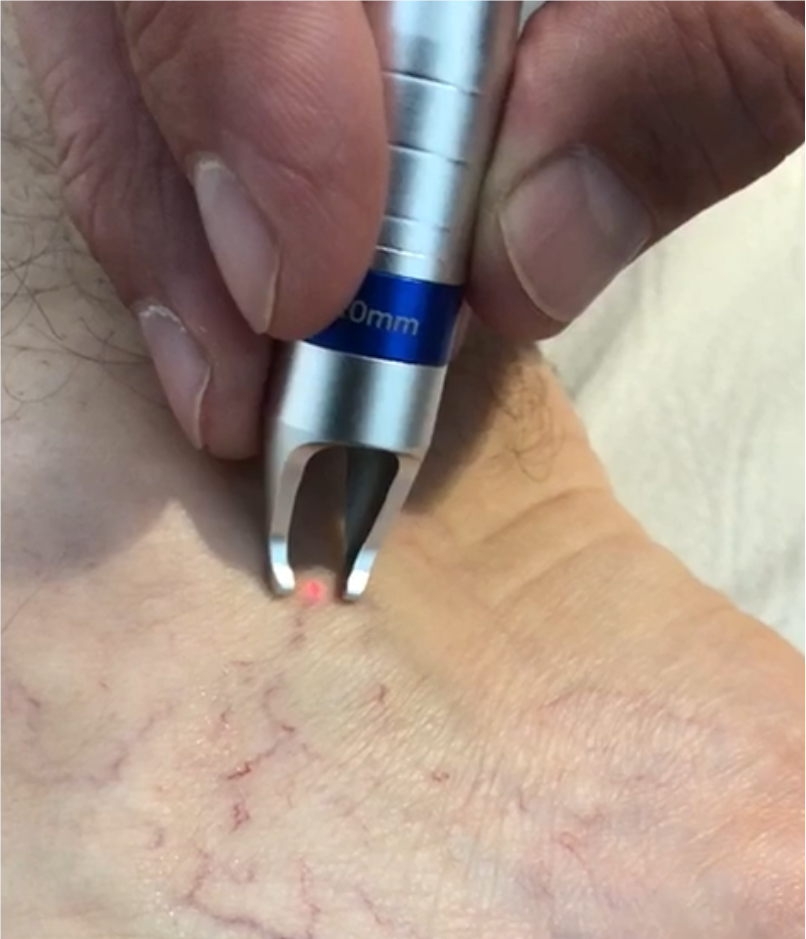
Execution best practices dictate how you physically handle the laser. Maintain a strict non-contact distance of 2 to 3 millimeters from the skin surface. Hold the handpiece at a precise 45-degree angle. Track the natural direction of the vessel as you move. The most critical safety rule involves motion: move the probe exactly 1 millimeter per pulse. Never leave the laser stationary while firing. Hovering in one spot will quickly accumulate excess heat, leading to severe thermal burns and permanent scarring.
Clear communication builds trust. Patients often assume lasers provide instant, permanent perfection. You must guide their expectations regarding timelines and the natural healing process. Honest consultation prevents post-treatment anxiety.
Set realistic expectations regarding the timeline for results. Inform the patient early that 2 to 4 sessions are typically required for full clearance. The body needs time to process the coagulated blood. Small facial veins usually take about 12 weeks to absorb fully. Larger, stubborn veins can take anywhere from 6 to 9 months to vanish completely. Once a specific vein is cleared, it does not return. However, genetic predispositions or lifestyle factors may cause new veins to form in adjacent areas over the years.
Managing side effects is an ongoing clinical responsibility. You must disclose objective risks during the informed consent process. Temporary hyperpigmentation or hypopigmentation occasionally occurs. This color shift fades naturally within 4 to 6 months and appears more frequently in patients with darker skin types. Mild crusting or scabbing along the vessel line is normal. Reassure them regarding the high safety profile of the procedure. Permanent scarring probability remains less than 0.5% when you follow strict vein removal protocols.
Post-care instructions dictate how the patient behaves at home. Immediate care in the clinic involves applying ice. Wrap the ice pack in plastic or gauze and apply it for 30 minutes. The barrier prevents moisture from entering the micro-damaged epidermis. In the short term, patients must avoid hot showers, saunas, and strenuous exercise for two weeks. Heat dilates vessels and can reverse coagulation. Instruct them not to apply makeup or active lotions for 24 hours. They should apply a prescribed burn ointment as directed. Long-term care requires strict sun protection and daily moisturizer application for at least 3 months to prevent post-inflammatory hyperpigmentation.
Selecting the right equipment defines your clinic's operational success. The market offers hundreds of devices, but true clinical-grade platforms share specific technical signatures. You must evaluate machines based on precision, power, and vendor reliability.
Essential technical specifications begin with spot size precision. Look for handpieces offering adjustable target rings, typically ranging from 0.2mm to 0.5mm in diameter. This precise adjustment ensures energy stays strictly confined to the targeted vessel. It spares adjacent healthy tissue from unnecessary thermal stress. Power output represents the next critical metric. Standard machines generally output between 15W and 30W. However, high-performance models offering up to 50W provide a distinct advantage. Higher peak power allows for faster energy delivery using reduced pulse durations. Shorter pulses mean less pain for the patient and faster treatment times for you.
Operational scalability defines how well the machine supports business growth. Highlight the zero consumables advantage. Unlike RF microneedling tips or specialized chemical peels, diode lasers require no ongoing consumable parts. This setup directly drives up profit margins per session. Uptime is another operational pillar. Ensure your chosen device features robust internal cooling systems. Busy clinics need machines capable of 24-hour continuous operation without overheating or dropping energy output.
Vendor support and compliance distinguish reputable manufacturers from transient sellers. Prioritize vendors that provide comprehensive clinical protocols and detailed user manuals. Hands-on training and certification programs add massive value to your purchase. They ensure your staff operates the vascular treatment device safely from day one. Additionally, look for customizable interfaces. Suppliers offering OEM or ODM services allow you to add your clinic's logo to the startup screen, reinforcing your brand authority.
The 980nm diode laser provides a highly predictable, evidence-backed solution for superficial vascular lesions. By leveraging selective photothermolysis, it targets oxyhemoglobin with pinpoint accuracy, delivering fast results with minimal patient downtime. Its application spans from facial telangiectasia to cherry angiomas, offering an excellent alternative to invasive sclerotherapy.
We advise clinic owners to prioritize high-performance machines featuring precise spot size control and robust cooling systems. Seek out vendors who offer comprehensive training and certification. Finally, remember that your clinical technique dictates your success. Mastering the incremental parameter step-up protocol and strictly maintaining a non-contact, moving technique will perfectly balance treatment efficacy with total patient safety. Implement these standards, and you will build a highly reputable vascular treatment service.
A: Patients typically require 2 to 4 sessions spaced 8 to 12 weeks apart. The exact number depends on the vessel's size, depth, and the patient's individual metabolic rate.
A: No. While highly effective for superficial facial veins, the 980nm wavelength cannot safely penetrate deeply enough to target large leg veins or varicose veins. Those require surgical or specialized phlebology intervention.
A: Patients usually experience a mild snapping sensation. Pain is successfully mitigated because the laser targets hemoglobin rather than melanin. Pre-treatment numbing creams and post-treatment ice compresses further ensure patient comfort.
A: No. One of the primary commercial benefits of this technology is the complete lack of consumable parts. This operational advantage offers clinics a high return on investment per treatment.