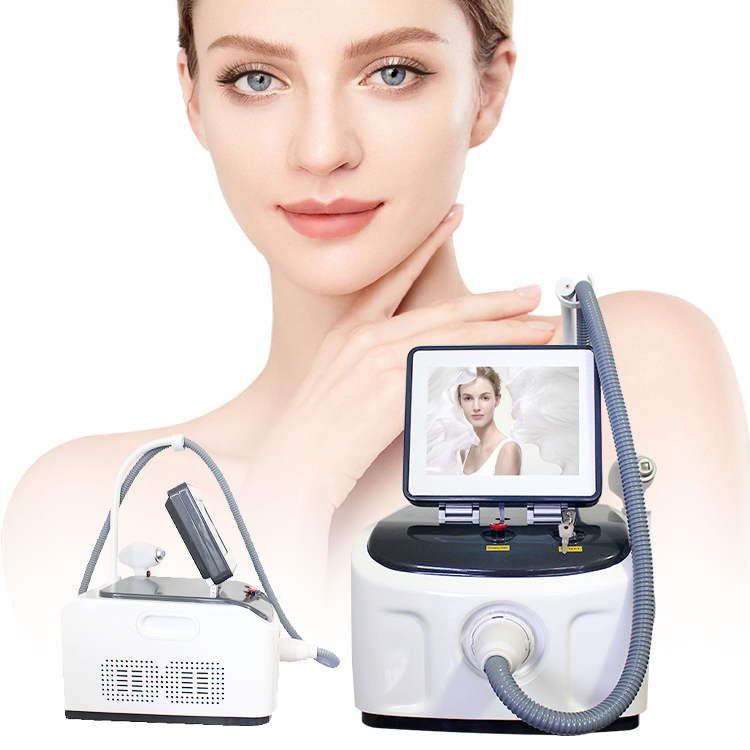
Views: 122 Author: Site Editor Publish Time: 2026-09-14 Origin: Site
Aesthetic clinic demands are shifting rapidly across the global market. Patients now expect safe and highly efficient treatments. They present a wider spectrum of Fitzpatrick skin types and hair textures. Modern facilities must adapt quickly to stay competitive. In the past, clinics relied heavily on traditional 808nm-only or 3-wavelength systems. Now, a new clinical standard has firmly emerged.
We are witnessing a major transition to 4-wavelength technology. These systems combine 755nm, 808nm, 940nm, and 1064nm wavelengths into one cohesive platform. This technological shift changes how practitioners approach follicular destruction entirely. Our objective in this guide is clear. We want to provide clinical directors and medspa owners a highly practical, evidence-based framework.
You will learn how to accurately evaluate and invest in a modern diode laser hair removal machine. We will explore core hardware specifications, analyze clinical advantages, and discuss operational realities. You can then make confident purchasing decisions for your practice.
Wavelength Synergy: Combining four wavelengths allows simultaneous targeting of hair follicle anatomy (bulge, bulb, papilla) and vascular supply.
Practice Efficiency: High-power modules paired with large treatment spot sizes significantly reduce session times and operator fatigue.
Patient Spectrum: Full Fitzpatrick scale compatibility (I-VI) eliminates the need for multiple single-wavelength devices.
Financial Viability: Evaluated correctly, multi-wavelength professional hair removal systems reduce consumable costs and accelerate ROI through higher daily patient throughput.
Understanding wavelength dynamics reveals the true capability of modern aesthetic devices. Older technologies often restricted clinical growth. Practitioners faced major hurdles when treating diverse patient demographics.
Relying solely on an 808nm laser severely restricts your clinic's addressable market. A single wavelength offers a fixed depth of penetration. It also has a fixed melanin absorption rate. The traditional 808nm spectrum struggles significantly with fine, lightly pigmented hair. It cannot target the minimal chromophore present in these delicate strands.
Furthermore, treating darker skin types (Fitzpatrick V-VI) using only 808nm carries inherent risks. The moderate melanin absorption can heat the epidermis too aggressively. This increases the probability of thermal burns or hyperpigmentation. Clinics utilizing legacy systems often turn away potential clients. They simply cannot guarantee safe or effective outcomes.
A 4-wavelength system overcomes these boundaries entirely. Each frequency targets a specific structural component of the hair follicle.
755nm Laser (Alexandrite Equivalent): This wavelength possesses exceptionally high melanin absorption. It is optimal for lighter skin tones and fine, light-colored hair. We see excellent clinical results on upper lips and delicate facial hair. A dedicated 755nm laser tackles hairs resisting longer wavelengths.
808nm Laser (Standard Diode): This remains the primary workhorse wavelength. It perfectly balances deep tissue penetration and moderate melanin absorption. It handles standard hair types efficiently. You achieve rapid treatment clearance for the majority of patients.
940nm Laser (Vascular Targeting): This addition transforms the treatment protocol. It specifically coagulates micro-vessels feeding the hair root. This action directly cuts off the nutrient supply. You achieve much more effective clearance of stubborn, deeply rooted hair.
1064nm Laser (Nd:YAG Equivalent): This wavelength exhibits the lowest melanin absorption. It provides the maximum penetration depth available. It bypasses the epidermal melanin safely. Therefore, it serves as the absolute gold standard for treating dark skin (Fitzpatrick IV-VI).
Simultaneous emission is the true breakthrough here. The handpiece delivers all four wavelengths in a single synchronized pulse. This prevents epidermal thermal damage effectively. At the same time, it maximizes follicular destruction. You hit the bulge, the bulb, the papilla, and the vascular supply instantly. This multi-depth targeting drastically reduces the total number of sessions a patient requires.
Wavelength Efficacy Comparison Chart | |||
Wavelength | Primary Target | Optimal Skin Type | Clinical Benefit |
|---|---|---|---|
755nm | Melanin (High) | Types I-III | Clears fine, superficial hair |
808nm | Melanin (Moderate) | Types I-IV | Rapid clearance of coarse hair |
940nm | Vascular Supply | All Types | Starves the hair papilla |
1064nm | Deep Follicle Base | Types IV-VI | Safe for dark skin tones |
You must scrutinize the internal hardware meticulously. Marketing brochures often inflate specifications. Real clinical efficacy relies entirely on robust engineering.
You must distinguish between true handle power and total machine power. This is a common trap for buyers. A manufacturer might advertise a "3000W machine." However, the actual laser handle might only output 800W. Total machine power simply runs the screen, electronics, and internal fans.
True handle power dictates the energy delivered to the skin. You should look for handle outputs between 1200W and 2400W. High handle wattage allows the device to maintain high frequencies safely. It ensures stable energy delivery during continuous gliding motions.
A large treatment spot handle slashes your clinical treatment times. Spot sizes typically range from 1cm² up to 4cm² in premium models. A 4cm² handle impacts treatment times for backs and legs significantly. You can complete a full back in under 15 minutes.
However, a strict trade-off exists. You must balance spot size against fluence (energy density) and pulse width. If a manufacturer enlarges the spot size without increasing the handle wattage, the energy dilutes. The treatment becomes completely ineffective. Always verify the maximum fluence available at the largest spot size setting.
Cooling technology represents the ultimate safety bottleneck. It protects the epidermis while massive thermal energy destroys the follicle.
You need to evaluate TEC (Thermoelectric Cooling), sapphire contact cooling, and internal water circulation simultaneously. Continuous epidermal cooling (-5°C to 5°C) is absolutely non-negotiable. It ensures high patient compliance. More importantly, it acts as your primary defense against severe burn prevention.
Cooling Technology Analysis | ||
Cooling Method | Mechanism | Clinical Importance |
|---|---|---|
TEC (Thermoelectric) | Active electronic heat exchange | Maintains continuous low temperatures for 12+ hours |
Sapphire Contact | Direct crystal-to-skin contact | Pre-cools the epidermis instantly before the pulse |
Water Circulation | Internal radiator and pump | Prevents the laser diode bars from overheating |
Acquiring advanced aesthetic clinic equipment brings operational shifts. Clinics must anticipate practical challenges on the clinic floor.
Operator fatigue drastically ruins clinic efficiency. You must assess the physical weight of the handpiece. Also, test the flexibility of the connecting cable. Technicians perform back-to-back sessions all day. A heavy, poorly balanced handpiece causes severe wrist strain. Rigid cables fight the operator during delicate maneuvers. You must prioritize lightweight, ergonomic handle designs.
Vendors frequently promise "millions of shots" for their handles. You must transparently assess these claims. We need to evaluate the realistic degradation of the internal laser bar. Poor quality bars lose their energy output rapidly after just 5 million shots. You might think you are delivering 20 Joules, but the degraded bar only outputs 10 Joules. This leads to frustrated patients and failed treatments. Demand transparent degradation curves from the manufacturer.
The operating software acts as your first line of defense. The importance of intuitive preset parameters cannot be overstated. Technicians should input the patient's gender, skin type, and target body area directly. The system must then suggest safe, evidence-based starting parameters. This minimizes operator error drastically. It prevents junior staff from applying dangerous fluence levels to sensitive skin.
Medical devices carry inherent liability. You must verify medical CE, FDA clearance, and ISO manufacturing standards. Utilizing uncertified machines exposes your practice to massive legal risks. Proper certification proves the device underwent rigorous clinical safety testing. Never bypass compliance checks when sourcing new equipment.
Strategic purchasing requires objective financial and operational analysis. You want your equipment to generate steady, reliable revenue. It must integrate seamlessly into your current service menu.
You must model your daily throughput carefully. Base your models on large spot sizes and multi-service capabilities. Consider the time difference when treating a large area. You can treat a full back in 15 minutes using a modern 4cm² handle. Older machines require 45 minutes for the exact same area.
This efficiency triples your hourly revenue capability. You can book three patients in the slot previously reserved for one. Professional hair removal becomes a massive profit center. The machine effectively pays for itself through sheer volume. High throughput also accommodates walk-in appointments, boosting overall clinic profitability.
Choosing the right manufacturing partner is critical. Your vendor dictates your long-term operational success. Follow this strict vetting sequence when shortlisting your suppliers.
Technical Support Infrastructure: Check the availability of domestic technical support. Determine if they offer immediate access to loaner devices during repairs. You cannot afford weeks of downtime.
Clinical Training Protocols: Assess their clinical training depth. A premium vendor provides comprehensive onboarding. They teach your staff the nuances of multi-wavelength applications.
Component Sourcing Transparency: Demand transparency in laser bar sourcing. Industry leaders openly advertise using premium components. For example, Coherent USA bars represent the pinnacle of laser stability. Avoid vendors hiding their internal component origins.
Cooling Capacity Validation: Request documented proof of continuous cooling performance. The device must maintain sub-zero tip temperatures during a full hour of continuous firing.
Upgrading to a 4-wavelength device represents a highly strategic business decision. It allows you to consolidate multiple older platforms into one powerful system. More importantly, it expands your addressable patient demographic instantly. You can treat the finest hair and the darkest skin tones confidently.
As you evaluate your options, you must reiterate your primary focus. Prioritize robust cooling hardware, spot size efficiency, and absolute vendor reliability. You should ignore superficial feature lists or flashy aesthetic designs. The core clinical hardware dictates your long-term success.
Take action today to modernize your clinic. We strongly encourage clinical buyers to request a precise revenue calculation model from their vendors. Schedule an in-depth clinical demonstration for your practice. Witness the speed, safety, and power of a true multi-wavelength system firsthand.
A: A 4-wavelength system introduces the 940nm wavelength to the standard 755nm, 808nm, and 1064nm trio. This specific addition uniquely targets the vascular supply of the follicle. It coagulates the micro-vessels feeding the hair root. This deprives stubborn hairs of nutrients, ensuring faster and more permanent clearance.
A: Yes. Diode lasers utilize targeted, collimated laser light. This delivers high efficacy with lower pain profiles. IPL uses broad-spectrum light, which causes higher epidermal scatter. IPL is generally more painful, less effective for permanent hair reduction, and carries higher burn risks for dark skin.
A: Premium handpieces realistically deliver 20 million to 40 million shots before significant energy degradation occurs. However, environmental factors heavily dictate this lifespan. Poor water quality in the cooling system or high ambient clinic temperatures will degrade the internal laser bars much faster.
A: Yes, it is highly safe for Type VI. Safety relies heavily on utilizing protocols focused on the 1064nm wavelength. This wavelength bypasses epidermal melanin. Operators must also ensure the machine utilizes robust continuous epidermal cooling. You must avoid relying on the 755nm range for deep skin tones.