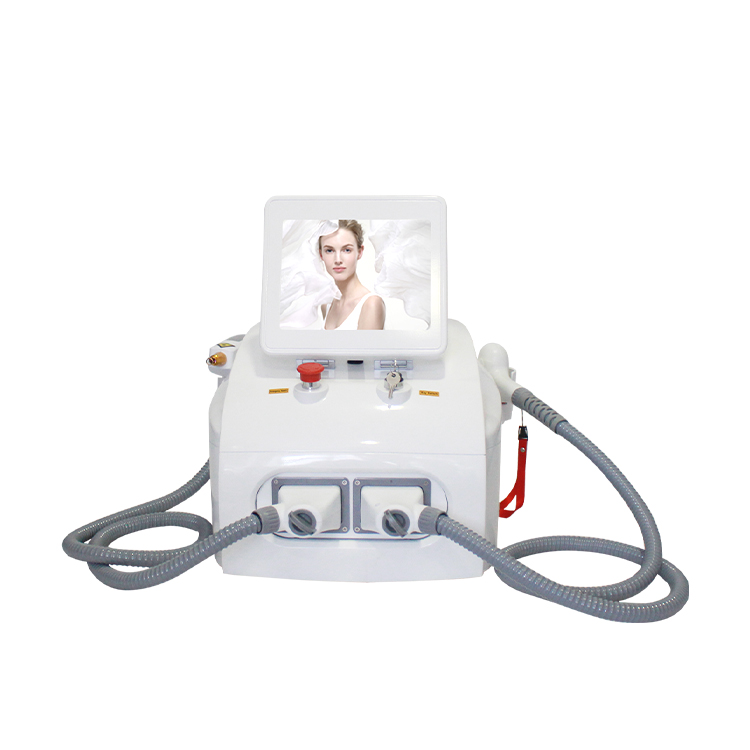
Views: 0 Author: Site Editor Publish Time: 2026-06-13 Origin: Site
Clinic and salon owners face a constant operational challenge. You must maximize revenue per square foot while carefully managing equipment capital expenditures. Space remains a premium commodity in aesthetic practices. Purchasing multiple standalone devices often strains budgets and clutters treatment rooms.
The aesthetic industry is rapidly transitioning from single-modality lasers to integrated platforms. Manufacturers are specifically focusing on merging continuous-wave hair removal with nanosecond or picosecond tattoo removal technologies. This shift offers a streamlined approach to expanding your service menu without leasing additional real estate.
This guide provides an objective, evidence-based evaluation framework. We will help you determine if a combination system meets your clinical standards, operational capacity, and revenue requirements. You will learn exactly what specifications separate a professional-grade unit from an entry-level compromise, ensuring your next equipment investment drives tangible growth.
Space & Capital Efficiency: Consolidating treatments into a dual function machine significantly reduces footprint and initial investment, but requires rigorous assessment of internal hardware capability.
No Compromise on Clinical Efficacy: A true clinical-grade diode YAG combination machine utilizes independent power supplies to ensure neither the diode hair removal nor the Q-switched Nd:YAG tattoo removal module underperforms.
Cooling is the Critical Failure Point: Managing heat from two distinct laser generators demands advanced thermal management (e.g., TEC + water cooling) to prevent downtime and extend handpiece lifespan.
Compliance & Training Base: Adopting multi-modality devices requires layered staff training and adherence to strict safety compliance for both pigment shattering and follicle targeting.
Evaluating the cost of acquiring, maintaining, and housing aesthetic equipment is complex. Buying two separate premium devices requires a substantial upfront investment. You also need dedicated treatment rooms to house them. Maintenance contracts double, and consumable tracking becomes fragmented. Consolidating these modalities into a single footprint unit solves multiple logistical headaches simultaneously.
Combining the two highest-demand aesthetic procedures accelerates your return on investment. Laser hair reduction and tattoo or pigment removal rank consistently high in consumer search volume. By investing in a high-quality beauty salon device that handles both, you instantly open two distinct revenue streams. You capture the younger demographic seeking hair removal alongside clients looking to erase regretful tattoos or sun damage.
Integrated platforms create powerful cross-selling opportunities. We call this the "Dual-Care" concept. For example, your practitioner can perform a lucrative carbon peel using the Nd:YAG module to rejuvenate the skin. Immediately after, they can switch handpieces to perform maintenance hair removal on the client's underarms. You never move the client to a different treatment room. This frictionless experience improves client satisfaction and increases your hourly yield per room.
You must transparently map out the break-even point when considering a hair tattoo combo. Standalone units require individual electrical setups and distinct consumable pipelines. A combined unit consolidates these costs. You calculate profitability by tracking the consumable cost per treatment. Diode handles offer millions of flashes, keeping hair removal margins high. Nd:YAG xenon lamps require replacement sooner, but the premium pricing of tattoo removal easily offsets this operational cost.
The primary goal of the diode module is follicular destruction. It achieves this via selective photothermolysis. The laser energy targets melanin inside the hair shaft, converting light into heat to destroy the surrounding stem cells.
When evaluating this module, wavelength specifications matter immensely. An 808nm single wavelength serves as the industry standard for general hair reduction. However, premium devices now feature triple wavelength blends (755nm, 808nm, and 1064nm). This blend targets varying follicle depths simultaneously. You must also verify continuous wave power output and spot size efficiency to ensure rapid, even treatments.
Unlike hair removal, this module relies on acoustic shockwaves. The target outcome is the photoacoustic shattering of exogenous tattoo ink and endogenous pigment. The laser fires in ultra-short bursts, creating a shockwave that breaks pigment into tiny particles. The body's immune system then digests these particles.
Essential specifications include nanosecond pulse widths and high peak power output. The handpiece must include interchangeable focal lenses. You need the 1064nm lens to treat dark inks (black, blue) and dermal pigmentation. You need the 532nm lens to target red or warm inks and superficial epidermal lesions safely.
Industry veterans often express skepticism toward "jack-of-all-trades" machines. Historically, budget manufacturers compromised performance by sharing a single, weak power supply across both modules. This resulted in poor clinical outcomes.
Top-tier manufacturers solve this engineering hurdle by utilizing dual independent power boards. They place isolated capacitors within the same chassis. This architecture ensures the dual function machine delivers full, uncompromised peak power to the Nd:YAG handpiece while simultaneously maintaining stable, continuous power for the diode module.
Wattage dictates clinical efficacy. A system lacking sufficient power will only bleach hair rather than destroy the follicle. Similarly, an underpowered YAG will fade a tattoo but fail to clear it completely. You must assess the true output of the generators. Look for coherent laser bars sourced from reputable global manufacturers. High wattage ensures the energy penetrates deeply enough to achieve permanent results.
Cooling is the lifeblood of any laser system. A shared cooling loop creates massive risk. If the high-heat YAG module overheats the water reservoir, the diode handpiece will suffer thermal degradation.
Evaluate active cooling specifications carefully. You need:
A high-capacity, closed-loop water circulation system.
Macro-channel cooling architectures (which are less prone to blockage than micro-channel systems).
TEC (Thermoelectric Cooling) capabilities positioned directly on the handpiece tip to protect the patient's epidermis.
Software dictates usability. Budget devices lock you into generic presets. Professional software allows for granular control. You must be able to adjust fluence (energy density), pulse duration (width), and frequency (Hz) independently. This flexibility is non-negotiable for a professional diode YAG laser, as treating a dense, black tattoo requires entirely different parameters than treating a faded, amateur tattoo.
Operators perform treatments for hours each day. Dual-umbilical cords can become heavy and rigid. Evaluate the weight and flexibility of the handpieces to prevent operator fatigue. Furthermore, scrutinize the manufacturer's claimed shot-count warranties. Diode bars should guarantee millions of shots, while Nd:YAG xenon lamps have distinct, much lower flash limits before requiring replacement.
Feature | Entry-Level Systems | Professional Clinical Systems |
|---|---|---|
Power Architecture | Shared single power supply | Dual independent power boards |
Cooling Mechanism | Basic water pump + fans | TEC + closed-loop macro-channel water |
Software Control | Locked presets only | Granular parameter adjustments |
Diode Wavelength | Single 808nm only | Blended 755nm / 808nm / 1064nm |
Consolidating equipment introduces a specific vulnerability. If the core operating system crashes or the central cooling pump fails, both treatment rooms effectively go down. You cannot perform hair removal or tattoo removal until the unit is repaired. This single point of failure can disrupt scheduling and impact daily revenue.
You can mitigate this risk through smart procurement. Source devices built with modular internal architecture. Modular design allows technicians to perform localized repairs rather than replacing the total system.
Confirm the manufacturer uses independent cooling loops for each handpiece if possible.
Ensure the device has self-diagnostic software to isolate electronic faults quickly.
Stock backup consumable parts (like water filters) on-site.
Do not underestimate the training required. A diode yag combination machine demands distinct protocols. Your staff must master two entirely different laser-tissue interactions. Hair removal relies on thermal damage applied smoothly over the skin. Tattoo removal relies on precise acoustic shockwaves to shatter ink without scarring the dermal layer. Layered training ensures safety and high clinical efficacy for both modalities.
Operational profitability requires strict tracking of your consumables pipeline. You must monitor the operational cost of Nd:YAG xenon lamps. They lose peak power as they age and require timely replacement to prevent patient complications. Diode handles last much longer but eventually need refurbishing. Additionally, schedule routine maintenance for internal water filter changes and optical lens cleaning to protect your investment.
Patient safety is paramount. Do not accept a general electrical safety certification (like a basic CE mark) as proof of medical efficacy. You must ensure the manufacturer holds valid CE Medical or FDA clearances for specific indications. The documentation must explicitly list both hair removal and tattoo removal as cleared treatments.
A machine is only as good as the support behind it. Establish clear criteria for evaluating manufacturer warranties. Review the Service Level Agreement (SLA) closely. Ask specific questions about replacement parts availability, especially handpieces. Verify their technical support response times and whether they offer remote video diagnostics.
Never purchase complex aesthetic machinery based solely on a brochure. Request clinical before-and-after data generated using the exact dual-system model you intend to buy. Organize a physical demo or a live-video technical teardown. Ask the sales engineer to open the chassis and visually inspect the power supply configuration to confirm the modules are truly independent.
Vendor Evaluation Workflow Chart | |
|---|---|
Phase 1: Documentation | Verify FDA/Medical CE certificates for both treatment modalities. |
Phase 2: Technical Audit | Confirm dual power supplies, TEC cooling, and laser bar origins. |
Phase 3: Clinical Proof | Review verified case studies and patient before/after portfolios. |
Phase 4: Service Agreement | Finalize SLA terms, warranty scope, and replacement turnaround times. |
A high-quality dual-platform device represents a highly viable solution for clinics looking to scale services efficiently. The key to success lies in hardware verification. The device must rely on uncompromised, independent internal modules rather than shared, underpowered architecture. When engineered correctly, these systems deliver exceptional clinical results while saving valuable floor space.
Before initiating vendor outreach, take these actionable next steps:
Audit your current client database to project actual demand for both hair and tattoo removal services.
Measure your treatment rooms to ensure the unit's footprint and umbilical cord lengths fit your setup.
Check your facility's electrical capacity to confirm it can handle high-draw dual generators.
Request itemized consumable pricing from shortlisted vendors to map out your exact profit margins.
A: Yes, but only if engineered correctly. High-end combo machines match standalone power by utilizing dual independent power supplies within the chassis. Budget models split a single power source, which severely compromises the clinical efficacy of both modalities.
A: Consumable lifespans differ drastically. Diode laser bars typically guarantee 10 to 20 million shots, lasting years under normal use. Nd:YAG xenon lamps have specific flash limits, usually requiring replacement between 500,000 and 1 million flashes to maintain peak photoacoustic power.
A: No. While the machine houses both technologies, internal power routing and single-screen software interfaces dictate alternating use. You treat the client with one modality, switch handpieces and software screens, and then proceed with the second treatment.
A: Yes, when used with proper parameters. Multi-wavelength diode lasers safely treat Fitzpatrick skin types I through VI for hair removal. The 1064nm Nd:YAG wavelength is the gold standard for safely treating darker skin types without causing epidermal thermal damage.