


Views: 168 Author: Site Editor Publish Time: 2026-07-24 Origin: Site


Acquiring aesthetic technology requires high capital expenditure. Clinic owners face immense pressure when upgrading their treatment menus. Buying the wrong device drains your budget and frustrates your staff. The selection process represents a crucial strategic business decision. Your choice directly impacts clinical outcomes, patient safety, and operational return on investment. Choose poorly, and you risk adverse events or idle machinery gathering dust.
We designed this article to offer a pragmatic, evidence-based framework. You will learn how to evaluate and shortlist the right equipment for a modern clinic or salon. We will explore core specifications, advanced modalities, and critical safety protocols in detail. This checklist ensures your investment aligns perfectly with your daily clinical goals. By understanding energy densities and regulatory compliance, you safeguard your business. Let us guide you toward making a confident, highly profitable clinical investment.
Success relies on matching technical specifications (energy density, pulse width, cooling) to your primary patient demographic and Fitzpatrick skin types.
Advanced modalities (like SHR) and multi-function systems offer distinct workflow advantages but require specific training and compliance protocols.
Verifiable regulatory compliance (FDA/CE) and robust manufacturer support are non-negotiable for clinical trust and liability protection.
You cannot make a sound purchasing decision without clearly defining your clinic’s daily objectives. Aesthetic technology must serve your specific patient demographic. A machine suited for a high-volume hair removal clinic will differ from one designed for complex dermatology cases. You must assess your operational realities before reviewing technical brochures. Let us break down the primary clinical goals you need to evaluate.
Defining target indications: First, you must assess your highest-demand treatments. Do your patients primarily request vascular lesion removal, pigmentation correction, or active acne treatments? General photoaging also drives massive demand. Identifying these core treatments dictates the specific filter wavelengths your equipment needs. You should select a platform that excels in your top three revenue-generating services.
Patient throughput considerations: Time is money in a busy clinic. You must evaluate how spot size and repetition rate impact your daily scheduling. A larger spot size covers broader areas quickly. A high repetition rate, measured in Hertz (Hz), allows the operator to move the handpiece faster. This combination drastically reduces treatment times. Shorter sessions mean you can book more patients per day.
Operator expertise: You must objectively assess the skill level of your staff. Systems requiring advanced medical oversight offer deep customization. They allow doctors to tweak every parameter. Conversely, systems built for trained aestheticians feature intuitive, pre-set protocols. These pre-sets guarantee safety and consistency across different operators. Match the complexity of the machine to the qualifications of your team.
When you align these three pillars, your equipment choice becomes much clearer. You avoid buying overpowered machines for basic tasks. You also prevent workflow bottlenecks caused by slow, undersized devices.
Technical specifications separate average results from outstanding clinical outcomes. You must understand what the numbers on a brochure actually mean. An effective ipl skin rejuvenation machine relies on precise physics. Let us examine the core specifications you must evaluate before making a purchase.
Fluence represents the energy delivered per unit area. We measure it in Joules per square centimeter (J/cm²). This metric is absolutely critical. High fluence guarantees the efficacious coagulation of target chromophores. If the energy is too low, you only stun the hair follicle or lightly warm the pigment. If the energy is too high, you risk severe epidermal damage. You need a machine capable of delivering sustained, stable energy across the entire pulse. Look for devices offering adjustable fluence levels to treat varying lesion depths safely.
You must understand Thermal Relaxation Time (TRT). TRT is the time a target takes to lose 50% of its heat. Small targets like fine capillaries cool down very quickly. Large targets like thick hair follicles retain heat much longer. Pulse duration must match the TRT of the target. A short pulse aggressively heats small targets. A long pulse gently heats larger targets while protecting the surrounding tissue. Pulse delay allows the epidermis to cool between bursts of energy. Adjustable pulse settings are non-negotiable for treating varied lesion sizes safely.
Intense Pulsed Light uses a broad spectrum of light. We use cut-off filters to block unwanted wavelengths. This allows us to target specific skin issues effectively. A versatile device requires a robust set of interchangeable filters. Below is a breakdown of essential filters and their primary clinical applications.
Wavelength Filter (nm) |
Primary Target Chromophore |
Clinical Indication |
|---|---|---|
420nm |
Porphyrins |
Active acne treatment and bacterial reduction |
515nm |
Melanin (Superficial) |
Epidermal pigmentation and sun spots |
560nm |
Hemoglobin / Melanin |
Rosacea, superficial vascular lesions, photoaging |
590nm |
Hemoglobin (Deeper) |
Larger vascular lesions and diffuse redness |
640nm - 690nm |
Melanin (Deep) |
Hair removal and deeper dermal targeting |
Patient comfort directly impacts your retention rate. Epidermal protection prevents adverse thermal events. Modern devices utilize contact cooling to chill the skin before, during, and after the light pulse. Sapphire crystal is the industry standard for light guides. It transfers heat efficiently away from the skin. Peltier (thermoelectric) chillers power these sapphire guides. They can drop the handpiece temperature to near freezing. You must prioritize strong integrated cooling. It provides a direct correlation to high patient comfort and superior epidermal protection.
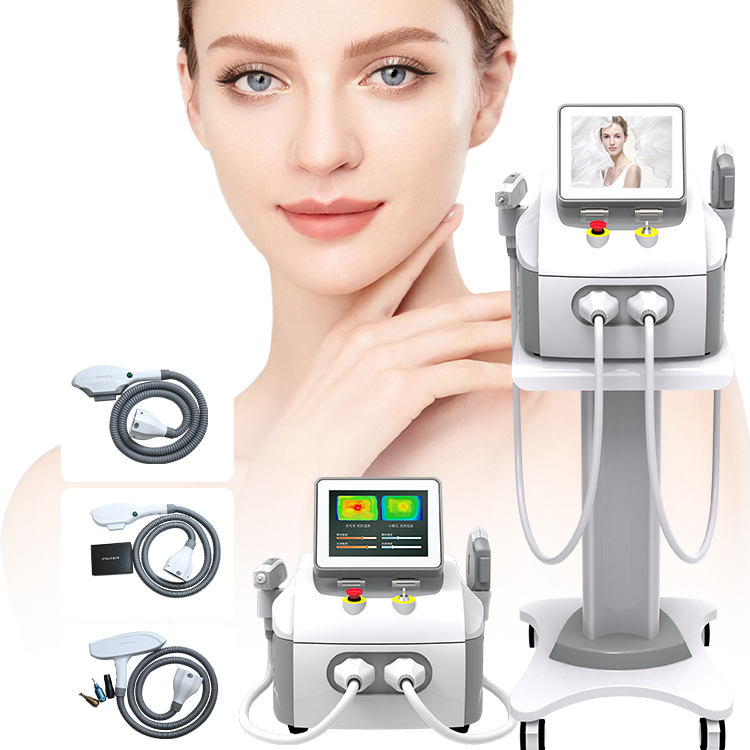
The aesthetic industry evolves rapidly. Manufacturers constantly introduce advanced delivery methods. These new technologies improve patient comfort and expand your clinical capabilities. You must decide if these advanced features justify the higher initial investment.
Traditional treatments use a "stamping" method. The operator places the handpiece, fires a high-energy shot, and moves to the next spot. This method often causes sharp, rubber-band snapping sensations. It can be quite painful for patients.
An SHR approach completely changes this dynamic. It utilizes an in-motion technique. The device delivers low-fluence energy at a very high repetition rate (often up to 10Hz). The operator continuously glides the handpiece over the treatment area. This method gradually accumulates heat within the dermis. It raises the target temperature without triggering the skin's pain receptors sharply.
Clinical advantages for darker skin: Traditional stamping poses high risks for Fitzpatrick IV-V skin types. The abundant epidermal melanin absorbs too much heat. SHR bypasses this risk. The gradual thermal accumulation safely treats darker skin tones without causing severe epidermal damage.
Superior pain management: The continuous motion and low peak energy make the procedure nearly painless. Patients often compare the sensation to a warm massage. This significantly boosts patient compliance and word-of-mouth referrals.
Faster treatment times: The continuous sweeping motion allows operators to cover large areas like backs and legs much faster than traditional stamping.
Clinic space is often limited. Floor space generates revenue. Many clinic owners look toward integrated multi-platform systems. These machines combine several technologies into one chassis. For example, a system might house intense pulsed light alongside an Nd:YAG or Er:YAG laser. This integration offers compelling workflow advantages.
You can treat superficial pigment with one handpiece, then switch to a laser for deep spider veins. This versatility prevents patients from seeking specialized treatments at competing clinics. Space-saving benefits are undeniable. You only need one power supply, one screen, and one footprint.
However, you must consider the inherent risks. A multi-platform device represents a "single point of failure." If the central processing unit or the internal cooling system breaks down, you lose all modalities at once. Your entire aesthetic menu goes offline. When buying integrated platforms, you must secure ironclad repair agreements. We highly recommend keeping a backup standalone unit if your budget permits.
Clinical efficacy means nothing without rigorous safety standards. Aesthetic devices operate using powerful thermal energy. Mishandling this energy leads to severe patient injuries and crippling lawsuits. You must implement strict protocols and rely on certified equipment.
You must respect the limitations of broad-spectrum light. We use the Fitzpatrick scale to classify human skin color and its response to UV light. Intense pulsed light is notoriously dangerous for Fitzpatrick skin types V and VI. These skin types contain dense concentrations of melanin in the epidermis.
When you fire a pulse of light, the epidermal melanin aggressively absorbs the energy. The light never reaches the deeper target chromophore. Instead, it superheats the surface skin. This causes blistering, severe burns, and post-inflammatory hyperpigmentation (PIH). You must maintain a transparent discussion with your patients regarding these contraindications. If you frequently treat Fitzpatrick V and VI patients, you must invest in a dedicated 1064nm Nd:YAG laser instead. Never force a technology to perform beyond its physical limitations.
The global market is flooded with cheap, uncertified grey-market imports. These machines often claim fake specifications. They possess unstable power supplies and inconsistent energy outputs. Using uncertified equipment destroys clinical trust and voids your liability insurance.
You must verify genuine regulatory clearances. Look for valid FDA 510(k) clearances if operating in the United States. In Europe, demand to see a genuine Medical CE mark. A genuine Medical CE mark always includes a four-digit Notified Body number next to the CE logo. Do not accept basic electronic CE certificates. Request the manufacturer's Declaration of Conformity. Cross-reference their registration numbers on official government databases. This diligence protects your patients and your business license.
Human error is the leading cause of adverse clinical events. You must establish rigorous Standard Operating Procedures (SOPs) for every treatment. Modern machines assist with this by offering built-in software parameters. The operator selects the skin type, hair color, and lesion depth. The software then recommends a safe starting energy and pulse duration.
These intuitive guides are essential for newly trained aestheticians. They provide a safe boundary to prevent accidental burns. However, experienced practitioners require clinical overrides. A seasoned doctor or advanced laser technician must have the freedom to adjust TRT, fluence, and cooling manually. Ensure the software balances strict safety guardrails with manual professional control.
Profitability depends on more than just the purchase price. You must analyze the ongoing operational costs and daily efficiency metrics. A cheap machine often becomes a financial burden due to hidden maintenance fees. Let us examine how to calculate true return on investment.
You must calculate the true cost per shot. Flash lamps degrade over time. Every time you fire the handpiece, the xenon gas inside the lamp diminishes. Eventually, the energy output drops below clinical efficacy. You must replace the lamp to maintain results.
Evaluate the guaranteed flash lamp lifespan carefully. Some budget machines guarantee only 100,000 flashes. Premium commercial models guarantee up to 1,000,000 flashes. Divide the cost of a replacement handpiece by the guaranteed shot count. This gives you your exact cost per pulse. High-capacity lamps drastically reduce your consumable expenses over a five-year period. Always ask the manufacturer about the exact replacement costs before signing a contract.
Do not underestimate physical design. Your staff will hold these handpieces for up to eight hours a day. Poor ergonomics lead to operator fatigue, repetitive strain injuries, and sloppy treatments. Heavy handpieces strain the wrist and forearm. Stiff umbilical cords fight against the operator's movements. You need lightweight, balanced handpieces. The umbilical cord must be highly flexible. Furthermore, the user interface (UI) must be highly responsive. Sluggish touchscreens slow down the consultation-to-treatment workflow. Fast, intuitive hardware keeps daily operational efficiency high.
Downtime destroys your revenue stream. When a machine breaks, you have to cancel fully booked days. You lose money and damage your clinic's reputation. A robust Service Level Agreement (SLA) is critical.
Evaluate the manufacturer's turnaround times for repairs. Do they have local engineers, or do you have to ship the unit overseas? Ask if they provide a guaranteed loaner machine during extended repair windows. Examine the standard warranty terms carefully. Most commercial warranties last one to three years. Clarify what is excluded. For example, dropping a handpiece is almost never covered. Local clinical training support is also vital. Good manufacturers provide ongoing educational updates to keep your staff sharp.
Selecting the right aesthetic technology is a critical milestone for your business. The ideal choice always balances uncompromising clinical efficacy with predictable operating costs. You must critically evaluate energy capabilities, safety features, and consumable lifespans. Matching these technical specs to your patient demographic guarantees excellent clinical outcomes.
We strongly advise you to avoid rushing this decision. Always request an in-clinic demonstration. Let your staff hold the handpieces and test the software interface. Furthermore, conduct thorough reference checks. Speak with existing users about their real-world experiences regarding reliability and customer support.
Your next step is to initiate a deeper technical evaluation. Contact a recognized industry specialist today. Schedule a hands-on technical demo to see the equipment perform in real time. Take control of your clinical future and invest in technology that drives genuine, sustainable growth.
A: Xenon flash lamps degrade continuously with use. While a lamp might function up to 1,000,000 shots, its clinical efficacy usually drops by 10-20% near the end of its life cycle. You should perform regular energy calibrations. Once the system struggles to maintain stable fluence at higher settings, you must replace the lamp to ensure consistent patient results.
A: Yes, provided the system uses interchangeable wavelength filters. A single handpiece can emit broad-spectrum light, while distinct filters block unwanted wavelengths. You simply slot in a 560nm filter for vascular lesions and swap to a 640nm filter for hair removal. Systems without interchangeable filters require separate, dedicated handpieces for each indication.
A: Traditional treatments use a stationary stamping technique with high peak energy, which can be painful. An SHR device utilizes an in-motion delivery method. It fires low-fluence energy at a rapid repetition rate (up to 10Hz) while sweeping across the skin. This allows for gradual thermal accumulation, drastically reducing pain while maintaining high efficacy.
A: Premium commercial equipment typically includes a 1-to-3-year comprehensive warranty. This covers the central processing unit, internal cooling mechanisms, and software faults. However, standard warranties almost always exclude consumable items like flash lamps and physical damage. Dropping a handpiece or cracking a sapphire guide will incur out-of-pocket repair costs.


