

Views: 0 Author: Site Editor Publish Time: 2026-04-23 Origin: Site
Upgrading or adding laser hair removal capabilities represents a significant capital expenditure for any aesthetic business. For boutique clinics and mobile practitioners, balancing clinical efficacy with spatial constraints makes a Diode Laser Hair Removal Machine a high-value consideration. Shift your focus from basic consumer aesthetics to medical-grade, commercial realities. You must evaluate these machines based on three pillars. First, clinical efficacy depends on Fitzpatrick scale versatility. Second, operational safety requires strict regulatory compliance. Third, tangible ROI relies on patient throughput and equipment lifespan.
This guide provides an objective, evidence-based framework for making a smart purchasing decision. You will learn how to evaluate portable diode systems against traditional stationary units. We also compare them to alternative light-based therapies. By the end of this article, you will know exactly how to identify a machine capable of delivering safe, profitable, and permanent results.
Clinical Versatility: Modern diode systems utilize multi-wavelength technology (755nm, 808nm, 1064nm) to safely treat the entire Fitzpatrick skin type spectrum (I-VI).
Business Economics: Commercial-grade portable units can achieve ROI within 3 to 6 months, provided they possess a lifespan of at least 50 million pulses.
Risk Mitigation: Purchasing Class 4 laser devices requires strict adherence to FDA/CE compliance, specialized operator training, and proper sourcing to avoid the liabilities of substandard imports.
Operational Efficiency: Smart software and advanced sapphire cooling systems reduce staff training time, increase treatment speed, and ensure patient comfort.
Space constraints and the rise of mobile aesthetic services demand smaller equipment footprints. Clinic owners can no longer dedicate entire rooms to massive, single-purpose laser boxes. However, you cannot sacrifice power output when executing a serious clinical application. This unique intersection of needs has driven rapid innovation in the portable medical device sector.
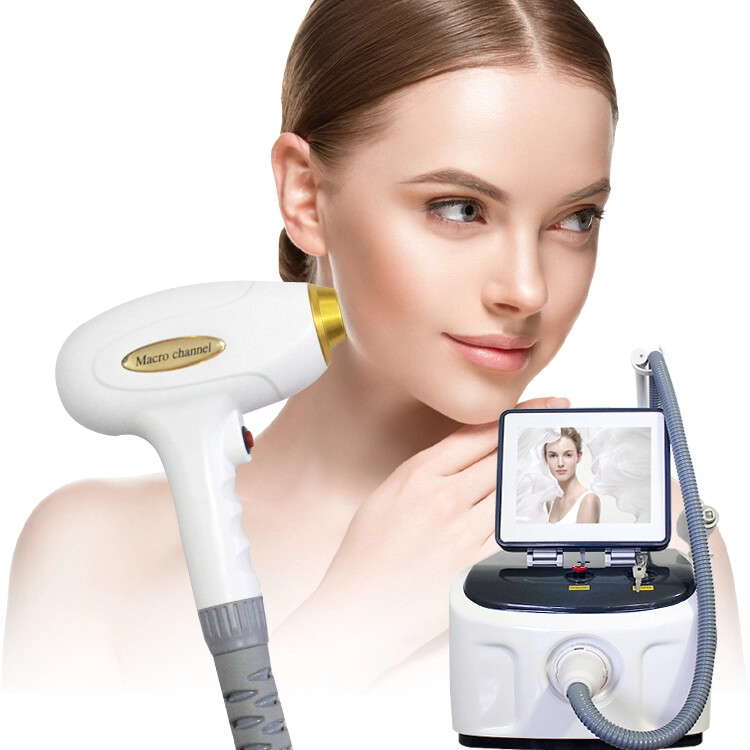
We must first clarify what "portable" means in a commercial context. A professional portable diode laser is a tabletop unit. You can easily move it on a rolling clinic trolley. It is absolutely not a handheld consumer gadget. These commercial portable units offer equivalent internal power modules to larger stationary machines. Manufacturers achieve this smaller size by utilizing condensed, highly efficient cooling architectures rather than bulky, outdated water tanks. They deliver the exact same energy levels required to permanently disable hair follicles.
Many aesthetic businesses mistakenly invest in Intense Pulsed Light (IPL) systems hoping to perform laser hair removal. You need to understand the technical superiority of diode lasers for this specific task. IPL uses a broad, scattered spectrum of light. It works well for general skin rejuvenation, but it lacks deep focus. Diode lasers produce a single, concentrated beam of pure light. This targeted beam penetrates deeply into the dermis to strike the melanin inside the hair follicle root. Because diode technology is so focused, your clients require fewer sessions. This efficiency directly increases client satisfaction and maximizes your clinic throughput.
Not all lasers are created equal. When evaluating a system, you must look past marketing claims and examine the core hardware specifications. These metrics separate medical-grade investments from risky consumer-grade imports.
Do not settle for single-wavelength machines. Instruct your buying team to look for tri-wavelength or quad-wavelength matrices. Different hair colors and skin tones require different depths of light penetration. A combined wavelength approach allows you to treat a broader client demographic safely.
Wavelength | Target Hair/Skin Profile | Clinical Benefit |
|---|---|---|
755nm (Alexandrite) | Fine, light-colored hair; Fitzpatrick Types I-III. | Maximum melanin absorption. Excellent for upper lip or fine facial hair. |
808nm / 810nm (Diode) | General hair types; Fitzpatrick Types I-IV. | The "gold standard" wavelength. Balances deep penetration with safe melanin absorption. |
1064nm (Nd:YAG) | Thick hair; Darker skin tones; Fitzpatrick Types IV-VI. | Bypasses epidermal melanin entirely to prevent burns on dark skin while destroying deep follicles. |
High-energy laser pulses generate immense heat. Integrated contact cooling is an absolute necessity. Look for machines featuring sapphire cooling tips. Sapphire offers exceptional thermal conductivity, instantly drawing heat away from the epidermis. Furthermore, evaluate the internal refrigeration system. Multi-stage cooling systems use active compressors or advanced thermoelectric coolers. They maintain sub-zero tip temperatures even during continuous, hour-long operations. This architecture prevents severe epidermal burns and provides a virtually painless experience for your clients.
Laser modules degrade over time. You must ask suppliers for verifiable benchmark metrics. A reliable commercial machine guarantees a laser bar lifespan between 50 million and 200 million pulses. Devices utilizing high-quality imported laser bars (such as those from reputable US or German manufacturers) often hit the upper end of this spectrum. Lower pulse counts mean you will be paying for expensive handpiece replacements much sooner.
Treatment speed heavily influences your daily revenue. Spot size determines how much surface area one pulse covers. A larger spot size, such as 14x25mm, covers backs and legs rapidly. Combine this with a high-frequency continuous motion mode. Advanced machines output laser pulses at 10 to 20 Hertz (Hz). This means the laser fires 10 to 20 times per second. Technicians can simply glide the handpiece over the skin, enabling a full-body treatment in under an hour.
Purchasing the hardware is only the first step. Operating beauty salon equipment requires skilled labor. High staff turnover represents a major operational challenge for modern aesthetic businesses. Modern portable systems include software features designed specifically to mitigate these staffing headaches.
Training a new technician to calculate precise joules and pulse durations takes weeks. If they guess incorrectly, they risk causing hyperpigmentation or severe burns. High turnover means clinic owners constantly spend money and time retraining new staff. Modern equipment dramatically shortens this onboarding curve.
Evaluate machines equipped with AI or smart operating software. These digital interfaces eliminate the dangerous guesswork of laser settings. The technician inputs the client's gender, treatment area, skin type, and hair thickness. The smart software then automatically recommends the optimal energy parameters, including fluence and pulse duration. Advanced systems even perform real-time skin pigment analysis to lock out dangerous energy levels automatically.
Client retention relies on consistent results. Many top-tier machines feature integrated Customer Relationship Management (CRM) systems directly on the touchscreen. These local databases store patient treatment histories, often accommodating up to 50,000 unique profiles. When a client returns for their fourth session, the machine instantly recalls the exact energy settings used last time. This ensures absolute consistency of care, regardless of which technician operates the portable laser device on any given day.
Operating high-powered light devices carries significant legal and physical risks. You must approach procurement with strict adherence to medical guidelines. Cutting corners on compliance can result in invalidated insurance policies or severe client injuries.
Commercial diode lasers are typically classified as Class 4 medical devices. This is the highest and most dangerous class of lasers. You must ensure the equipment holds legitimate regulatory clearance for your region. In the United States, this requires FDA clearance. In Europe, the machine must carry CE medical certification. Ask the manufacturer to provide verifiable certification numbers, and check those numbers against official government databases.
The global B2B marketplace is flooded with deeply discounted, unbranded machines. Avoid purchasing these white-label devices without rigorous vetting. Cheap imports often use substandard laser bars, weak water pumps, and fake sapphire glass. They promise massive power outputs but deliver inconsistent energy spikes that cause burns. Furthermore, overseas sellers often vanish after the sale, leaving you without post-purchase technical support or replacement parts when the machine inevitably breaks down.
Owning a Class 4 laser mandates specific clinic safety protocols. These are entirely non-negotiable.
Specialized Goggles: Both the operator and the client must wear specialized laser safety goggles calibrated exactly to the machine's wavelengths (e.g., OD6+ rating for 808nm). Standard sunglasses offer zero protection and risk permanent blindness.
Electrical Wiring: Despite their portable size, these machines draw immense electrical current. You must verify whether the machine requires 110V or 220V power. Connect them to dedicated, surge-protected clinic circuits to prevent operational instability.
Environmental Controls: Maintain a cool, well-ventilated treatment room. High ambient temperatures force the machine's internal cooling system to work harder, accelerating component wear and tear.
A high-quality clinical laser is a revenue-generating asset. Understanding how to calculate your payback period and manage ongoing maintenance ensures your clinic remains profitable.
Commercial portable units typically achieve a full return on investment within 3 to 6 months. This standard projection relies on continuous daily utilization. Consider a simplified model: If you charge $150 per session and perform just four sessions a day, the machine generates $600 daily. Over a 20-day working month, that equals $12,000 in gross revenue. Deduct minimal consumable costs (like ultrasound gel and sanitizing wipes), and the machine rapidly pays for its initial purchase price. From month four or five onward, the device generates pure profit.
Profitable operation requires strict adherence to preventative maintenance. If you neglect these routine tasks, the machine will fail, causing expensive downtime.
Water Replacement Protocols: Internal cooling systems rely on pure, deionized, or distilled water. You must replace this water every 30 days. Using tap water introduces minerals and algae that will permanently destroy the internal water pump and laser arrays.
Daily Lens Cleaning: Technicians must clean the sapphire treatment window after every single client using 70% isopropyl alcohol. Built-up hair debris on the lens will absorb laser energy, causing the glass to shatter.
Periodic Calibration: Schedule professional calibration by certified technicians annually. This ensures the output energy on the screen matches the actual energy delivered to the skin.
When selecting a supplier, scrutinize their warranty contracts. Do not accept a generic "one-year warranty" without reading the fine print. Evaluate contracts based on the availability of replacement handpieces. If a handpiece fails, how fast can the supplier ship a new one? Ask for guaranteed downtime limits. A machine sitting broken in your clinic costs you thousands of dollars in canceled appointments and lost client trust.
Investing in a portable diode system requires a strategic balance of clinical capability, patient safety, and spatial efficiency. These compact powerhouses deliver the deep follicular penetration needed for permanent hair reduction while keeping clinic footprints remarkably small.
As you shortlist potential equipment, prioritize multi-wavelength capabilities and verifiable pulse-count lifespans over the base price tag. A slightly more expensive machine with a 100-million pulse guarantee and strict FDA compliance will drastically outperform a cheap import that fails after three months.
Take action today by requesting detailed specification sheets and clinical trial data from vetted manufacturers. Ask for hands-on demonstrations or video consultations to see the software interface in action. By applying this objective evaluation framework, you will secure a reliable asset that drives substantial revenue for your aesthetic business.
A: We define a machine's lifespan by its pulse count rather than calendar years. Commercial lasers typically guarantee 50 million to 200 million pulses. With moderate to heavy clinic use, this translates to approximately 5 to 10 years of reliable operation, assuming you strictly adhere to all daily and monthly maintenance schedules.
A: Yes, provided it utilizes advanced specifications. The machine must feature the 808nm or 1064nm wavelengths, which bypass epidermal melanin safely. It also requires an advanced surface cooling system (like sapphire contact cooling) to protect the skin. When properly equipped, they safely treat Fitzpatrick scale skin types I through VI.
A: IPL uses a scattered, broad spectrum of light. It requires far more treatment sessions and works better for general skin rejuvenation. A diode uses a true, focused laser beam. It targets the melanin inside the hair follicle directly, yielding faster, less painful, and far more permanent hair reduction results.
A: Yes. Despite their portable footprint, Class 4 medical lasers draw significant electrical power to charge their capacitors. Always check specific voltage requirements (110V versus 220V). We strongly advise plugging these devices into dedicated, surge-protected clinic circuits to prevent operational instability or blown fuses during treatments.


