

Views: 164 Author: Site Editor Publish Time: 2026-06-15 Origin: Site
Capital equipment investments carry massive stakes for modern aesthetic clinics and Medspas. Medspa owners face intense pressure to deliver flawless results quickly. Choosing the wrong hair removal system directly impacts your clinical efficacy. It also severely throttles your daily clinic profitability. You simply cannot afford operational bottlenecks. Dissatisfied patients will quickly leave for competitors if treatments hurt or fail. Today, the Diode Laser Hair Removal Machine stands as the absolute clinical gold standard. It perfectly balances rigorous patient safety with high daily throughput. Furthermore, it ensures highly reliable hair follicle elimination across diverse skin tones. We designed this comprehensive guide as a transparent, evidence-based evaluation framework. We want to help clinic owners confidently select a professional aesthetic device. You will discover exactly how to achieve long-lasting results. This knowledge helps you optimize treatments without inflating operational bottlenecks.
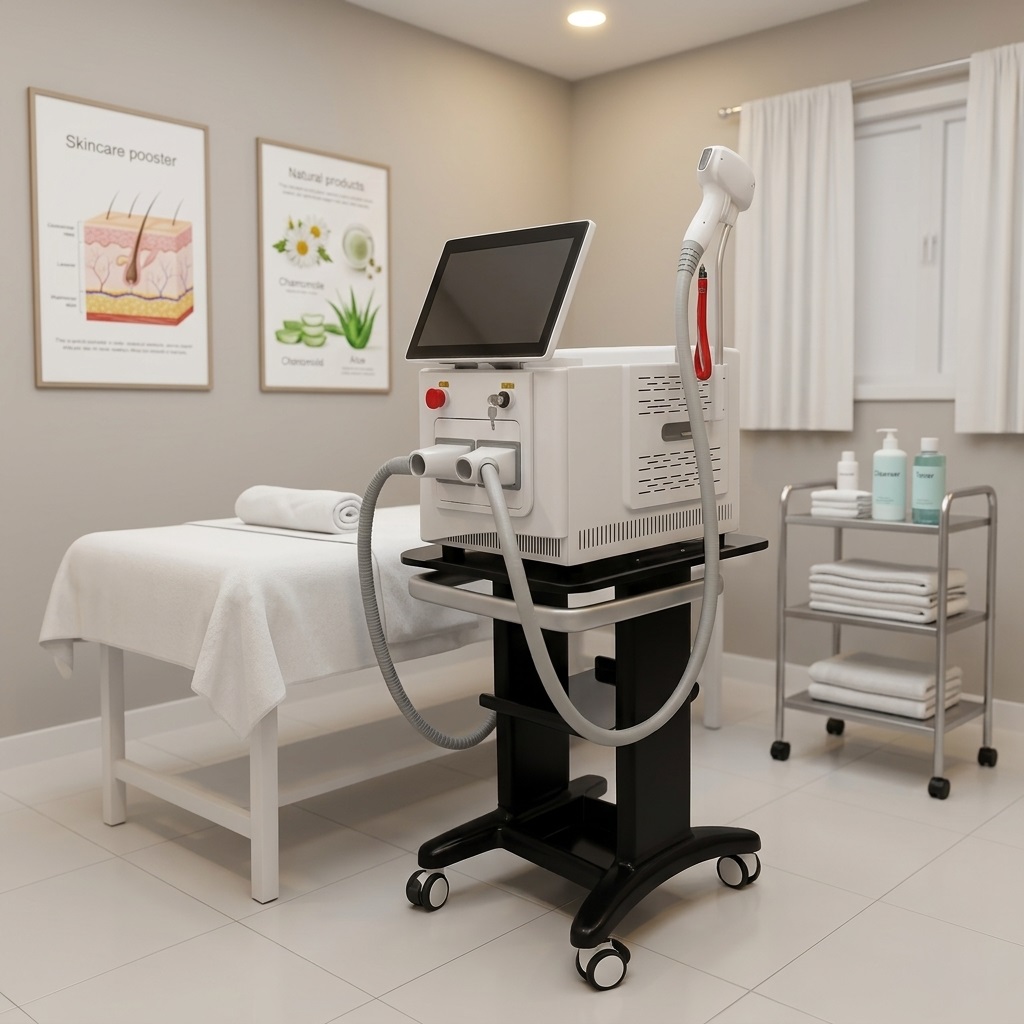
Targeted Efficacy: Diode lasers utilize selective photothermolysis (typically 808nm or blended wavelengths) to permanently reduce hair across Fitzpatrick Skin Types I–VI.
Operational Efficiency: High-speed scanning and large spot sizes allow for full-body treatments in under 30 minutes, maximizing daily appointment slots.
Risk Mitigation: Modern systems rely on integrated sapphire contact cooling and intelligent software presets to minimize operator error and patient discomfort.
Total Cost of Ownership: Evaluating a machine requires looking beyond the sticker price to assess handle shot-life, water filtration maintenance, and clinical training support.
Modern clinics require predictable clinical outcomes. You must deliver consistent results regardless of the practitioner operating the machine. Diode lasers provide this exact level of clinical predictability. They use continuous wave delivery and repetitive pulsing techniques. This means they operate at a high frequency but a lower energy density (fluence). The laser safely targets the melanin concentrated inside the hair bulb. It does this effectively during the anagen phase. The anagen phase represents the active growth cycle of the hair. Heat builds up gradually, safely destroying the follicle without damaging the surrounding epidermis.
Speed directly translates to clinical success. You need to maximize your daily patient throughput. We frequently contrast the fast turnaround of modern diode systems against older modalities. Older machines required stamping techniques. These outdated methods took hours for full-body sessions. Today, a modern diode system completes a full back or set of legs in roughly 20 minutes. Faster sessions allow you to book more appointments per day. This operational speed dramatically increases your daily revenue potential.
Patient retention relies heavily on the treatment experience. You build an excellent clinic reputation by prioritizing comfort. Modern diode systems integrate continuous epidermal cooling. This technology dramatically reduces pain during the procedure. Patients no longer dread their appointments. Moreover, they achieve an 80 to 90 percent reduction in hair after just five to seven sessions. Happy patients finish their treatment plans. They also drive high-quality referral business to your clinic.
Predictability: Gradual heat buildup safely destroys follicles during the anagen phase.
Speed: Full-body treatments finish in roughly 20 minutes.
Comfort: Continuous cooling makes the process nearly painless.
Retention: Fast, painless results generate strong word-of-mouth referrals.
Understanding wavelength configurations remains critical for any clinic owner. Wavelengths determine how deeply the laser penetrates the skin. They also dictate how strongly the melanin absorbs the light energy. You must align the machine's capabilities with your specific patient demographic.
The single wavelength 808nm or 810nm represents the classic industry benchmark. Practitioners consider it the standard workhorse. It offers deep follicular penetration alongside moderate melanin absorption. This balance makes it highly effective and safe. It works beautifully for the vast majority of skin types and hair textures. If you run a general practice, the 808nm wavelength provides incredible daily utility.
Tri-wavelength systems combine 755nm, 808nm, and 1064nm into a single handpiece. This blended approach offers maximum clinical versatility. We break down the specific role of each wavelength below:
755nm (Alexandrite equivalent): This wavelength provides high melanin absorption. It works best for treating lighter skin types. It excels at targeting fine, lightly pigmented hair. You use it often for upper lip or facial hair.
808nm: This remains the standard workhorse. It balances penetration and absorption perfectly for mid-toned skin.
1064nm (Nd:YAG equivalent): This wavelength offers the deepest penetration. It has the lowest melanin absorption rate. This specific trait makes it absolutely critical for treating darker skin tones. You can safely treat Fitzpatrick V and VI patients without causing epidermal burns.
Evaluation Takeaway: We advise buyers to match the machine's wavelength profile strictly to their regional demographic. If you treat a highly diverse patient base, a tri-wavelength system is essential. It ensures you never have to turn a patient away.
Wavelength | Melanin Absorption | Penetration Depth | Ideal Fitzpatrick Skin Type | Best For |
|---|---|---|---|---|
755nm | High | Shallow | Types I - III | Fine, light hair (e.g., facial hair) |
808nm / 810nm | Moderate | Medium | Types I - IV | Standard body hair, general use |
1064nm | Low | Deep | Types V - VI | Dark skin, deep follicles (e.g., scalp, armpits) |
You must evaluate hardware components rigorously. The internal engineering dictates both clinical efficacy and machine longevity. Entry-level machines often look similar to commercial-grade units on the outside. However, the internal components tell a very different story.
Advanced cooling represents an absolute necessity. You use cooling systems to protect the epidermis from thermal injury. High-end machines utilize Sapphire contact cooling, ChillTip technology, or internal TEC (Thermoelectric Cooling) radiators. These systems draw heat away from the skin instantly. They prevent superficial burns. They also eliminate the need for messy, time-consuming numbing creams. Proper cooling keeps the skin at a safe, constant temperature while the follicle absorbs the heat.
The handpiece spot size dictates your treatment speed. A larger spot size covers more surface area per pulse. This significantly reduces overall treatment time for large areas like the back. Furthermore, some modern systems incorporate vacuum-assisted technology. The handpiece gently suctions and stretches the skin. This action pulls the follicle closer to the laser energy source. Because the target sits closer, you can use a lower energy density. This minimizes pain while maintaining excellent clinical efficacy.
Machine wattage matters immensely. Commercial-grade machines typically operate between 1200W and 1600W or higher. A high-wattage machine delivers the required energy rapidly and efficiently. It achieves this without overworking its internal laser bars. When a machine operates comfortably below its maximum threshold, it lasts much longer. Lower-wattage machines must fire longer pulse widths to achieve the same energy output. Long pulse widths increase the risk of epidermal heating and patient discomfort.
Common Mistake: Purchasing a low-wattage machine to save upfront capital. These entry-level systems overwork their internal components daily. The laser bars burn out quickly, leading to extensive downtime.
Your practitioners need reliable software. An intelligent interface provides pre-set, skin-type-specific parameters. The operator selects the patient's gender, skin type, and hair density. The machine automatically suggests the optimal fluence and pulse width. This assists newer practitioners tremendously. It ensures safety and consistency across different staff members. Intelligent software drastically reduces the risk of operator-induced burns.
Clinic owners frequently compare different optical technologies before purchasing. Understanding the physical differences between modalities helps you explain the value to your patients. You must know why your technology outperforms older alternatives.
We must clarify a common misconception immediately. IPL is not a true laser. IPL uses a flashlamp to emit a broad spectrum of scattered light. It sends out multiple wavelengths simultaneously. Much of this scattered light never reaches the hair follicle. Instead, the surrounding skin absorbs it. Diode technology uses coherent, targeted light. It offers highly specific tissue targeting. A diode requires significantly fewer sessions to achieve clearance. More importantly, diodes operate much safer on darker skin tones. IPL carries a high risk of burning darker skin due to its broad, uncontrolled scatter.
Standalone Nd:YAG lasers utilize a 1064nm wavelength exclusively. They provide extreme safety for treating dark skin types. The 1064nm wavelength bypasses surface melanin entirely. However, this modality presents distinct drawbacks. Nd:YAG traditionally causes more pain during treatment. Furthermore, it struggles to eliminate fine or light-colored hair because of its low melanin absorption. A blended diode system solves this issue. It provides the safety of the 1064nm wavelength while retaining the efficacy of the 808nm wavelength.
Electrolysis inserts a tiny probe directly into individual hair follicles. It destroys each follicle with an electric current. We frame electrolysis as highly effective for small, stubborn areas. It remains the only option for truly gray or white hair. However, electrolysis is commercially unviable for large body areas. Treating a full back or legs requires hundreds of hours. Diode systems offer extreme speed. They handle large areas efficiently, making them the superior commercial choice.
Technology | Light Type | Treatment Speed | Skin Type Safety | Discomfort Level |
|---|---|---|---|---|
Diode | Coherent / Targeted Laser | Very Fast (Gliding Motion) | All Types (I-VI) | Low (with cooling) |
IPL | Scattered Broad Spectrum | Moderate (Stamping) | Light Skin Only (I-III) | Moderate (Snap sensation) |
Nd:YAG | Coherent Laser (1064nm) | Moderate | Excellent for Dark Skin | High |
Owning commercial aesthetic equipment requires strict operational discipline. You must plan for routine maintenance and understand your regulatory environment. Failing to maintain your machine compromises patient safety and degrades your hardware rapidly.
Every laser handpiece eventually degrades. You must evaluate the practical reality of handpiece degradation before purchasing. Manufacturers rate their handpieces using a specific shot count warranty. Entry-level machines might offer a 10 million shot lifespan. Commercial-grade handles frequently guarantee 20 million to 50 million shots. You must check this rating carefully. A high-volume clinic burns through shots quickly. A handpiece rated for 50 million shots ensures several years of daily operational use before you need a replacement.
The internal cooling system dictates the survival of the laser emitter bars. These systems demand strict, non-negotiable maintenance routines. You must exclusively use pure distilled water inside the machine. Tap water introduces minerals that calcify and destroy the internal channels. Furthermore, you must perform regular water changes. We recommend changing the water entirely every two to three months. Additionally, modern machines use specific water and ion filters. You must replace these filters annually. If you ignore filter changes, the water flow slows down. The laser bars overheat and burn out immediately.
Best Practice: Assign a specific staff member to track maintenance schedules. Log every water change and filter replacement in a dedicated clinic binder.
You cannot operate clinical lasers without understanding local compliance laws. Regulatory frameworks vary wildly depending on your state or national medical board. Some jurisdictions allow certified laser technicians to operate these devices independently. Other regions impose strict supervision requirements. You may need a Medical Director (MD), a Physician Assistant (PA), or a Registered Nurse (RN) on-site. Always verify your local regulations regarding delegation of duties. Ensure your malpractice insurance covers the specific practitioners firing the laser. Proper compliance protects your patients and your business license.
Investing in a reliable system perfectly balances high-ticket revenue with uncompromising clinical safety.
Prioritize devices carrying FDA or CE clearances to ensure verified engineering standards.
Always verify the manufacturer's post-purchase training programs and technical support infrastructure before signing.
Request hands-on clinical demos and review case studies demonstrating efficacy across diverse skin types.
Consult with authorized representatives to map out specific maintenance schedules and operational workflows.
A: Patients typically require 5 to 7 sessions. You must space these appointments 4 to 8 weeks apart. The interval depends heavily on the specific body area being treated. This spacing aligns with the patient's individual hair growth cycle. The laser only destroys follicles actively residing in the anagen (growth) phase.
A: Yes, it provides excellent safety across all skin types. This remains especially true for machines equipped with 808nm or 1064nm blended wavelengths. These specific wavelengths bypass surface melanin effectively. They safely target the deep follicle in darker skin tones without causing epidermal burns.
A: Manufacturers usually rate commercial handles for 20 million to 50 million pulses. Depending on your clinic's daily volume, this impressive shot count translates to several years of reliable use. Eventually, the internal diode bars degrade, and the handpiece requires a routine replacement or factory refurbishment.
A: No aesthetic device guarantees complete removal. The FDA classifies this procedure strictly as "permanent hair reduction." Most patients experience an 80 to 90 percent clearance rate. Normal hormonal changes can trigger minor new hair growth over time. Patients generally require brief annual touch-up sessions to maintain optimal smoothness.


