Views: 167 Author: Site Editor Publish Time: 2026-07-06 Origin: Site
Aesthetic medicine is rapidly shifting away from invasive surgical facelifts. We are entering an era dominated by non-invasive thermal coagulation. High-Intensity Focused Ultrasound sits at the very forefront of this transformation. Patients demand dramatic results. They also refuse long recovery times.
Traditional focused ultrasound has proven clinical efficacy. It has foundational roots in precision oncology. It boasts FDA clearances dating back to 2009 for brow lifts. However, today's aesthetic market feels saturated by confusing marketing terminologies. Practitioners and buyers often struggle to separate genuine technological leaps from mere buzzwords. Manufacturers frequently make exaggerated claims.
This article cuts directly through the industry noise. We will break down the exact clinical realities of using a 3D HIFU device for facial rejuvenation. You will discover practical frameworks for evaluating equipment returns. We will also clarify how to establish safe, robust treatment protocols.
Mechanism of Action: HIFU bypasses the epidermis to deliver 65–70°C thermal energy directly to the SMAS layer, triggering Type I and III collagen synthesis while inhibiting collagen-degrading enzymes (MMP-1).
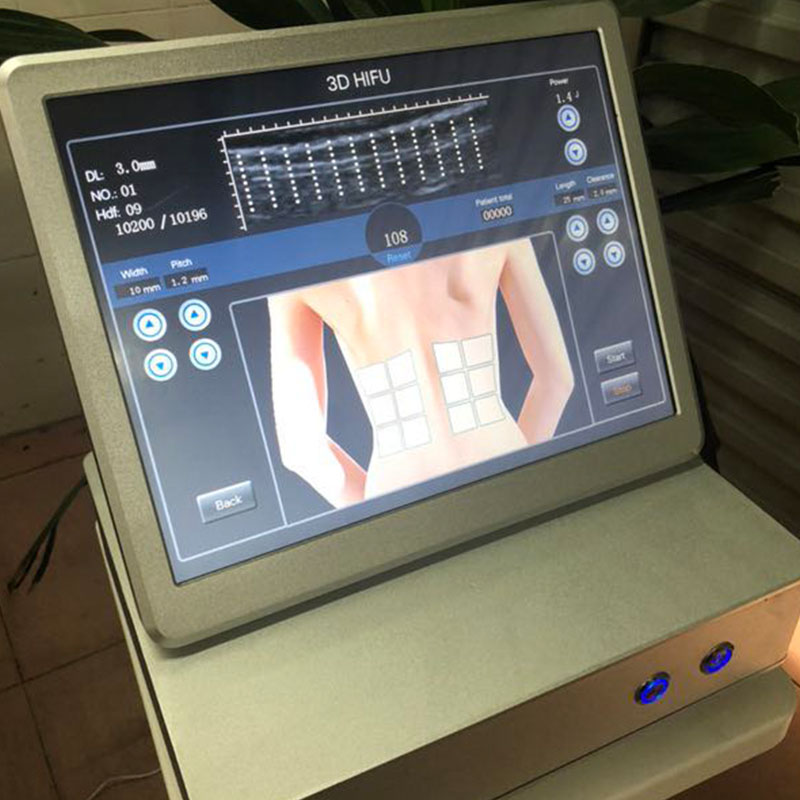
The 3D Advantage: Unlike traditional single-line pens, a 3D HIFU machine allows for multi-dimensional calibration (1 to 11 lines per shot), drastically reducing treatment time and improving precision.
Comparative Efficacy: Ultrasound skin tightening penetrates deeper (up to 4.5mm for the face) than Radiofrequency (RF) or microneedling, making it the superior choice for structural lifting.
Cost Efficiency: For clinics, a single cartridge (up to 25,000 shots) can service over 1,000 clients, offering a highly predictable ROI compared to recurring consumable-heavy treatments.
True facial lifting requires deep structural engagement. You cannot achieve profound results by only treating the surface. Focused sound waves bypass the epidermis entirely. They reach the Superficial Muscular Aponeurotic System (SMAS) in under 0.5 seconds. This rapid delivery prevents surface burns. It ensures maximum energy deposition exactly where it matters. Surgeons manipulate this exact same SMAS layer during traditional facelifts.
A standard HIFU device operates within very specific thermal zones. The scientific threshold for neocollagenesis sits between 65°C and 70°C. Cellular friction occurs rapidly at this precise temperature. This friction creates deliberate micro-trauma inside the tissue. The body responds immediately by launching a robust healing cascade.
We see significant evidence at the molecular level. Independent dermatological research confirms these physiological facts. Ultrasound energy stimulates new elastin production. It triggers both Type I and Type III collagen synthesis. Furthermore, the technology actively downregulates matrix metalloproteinase-1 (MMP-1). MMP-1 is the primary enzyme responsible for aging-related collagen breakdown. You are not just building new collagen. You are actively stopping its destruction.
Always assess the patient's subcutaneous fat thickness before treating.
Reserve 4.5mm cartridges strictly for the deep SMAS layer.
Use 1.5mm depths for delicate superficial regions around the eyes.
Avoid treating directly over the thyroid gland or major nerves.
Understanding the physiological targets helps operators achieve better outcomes. Below is a simplified chart detailing target layers.
Probe Depth | Target Tissue Layer | Primary Clinical Outcome |
|---|---|---|
1.5mm | Superficial Dermis | Refines pores and reduces fine lines. |
3.0mm | Deep Dermis | Stimulates deep collagen and improves elasticity. |
4.5mm | SMAS Layer | Provides structural lifting and facial contouring. |
You must understand how different technologies compare. Depth is the primary differentiator. Let's contrast these popular options clearly. Radiofrequency only heats the upper layers. Microneedling relies on physical punctures.
Technology | Maximum Penetration | Primary Focus Area | Recovery Time |
|---|---|---|---|
Up to 4.5mm (Face) | Deep structural lifting | Zero to minimal downtime | |
Radiofrequency (RF) | ~2.0mm to 3.0mm | Diffuse tissue rejuvenation | Zero downtime |
Microneedling | ~0.5mm to 2.5mm | Texture and scar correction | 2 to 5 days |
Many buyers find the "3D" label confusing. It is not just a marketing gimmick. It refers directly to three-dimensional physical adjustability. Older machines rely on single-line stamping. Modern units offer a vastly superior control mechanism. This multi-dimensional approach changes everything about clinical workflows.
Let's define the core parameters.
Line Count: Operators can emit 1 to 11 lines in a single press. Traditional machines only fire one single line at a time.
Spatial Calibration: You can adjust the exact distance between individual dots. You can also change the distance between parallel lines. Adjusting the total line length is equally simple.
Anatomical Versatility: These machines handle multi-depth treatments easily. They excel at face lifting, neck firming, and body fat reduction.
This multi-line output creates immense operational efficiency. You cover larger surface areas rapidly. A full face and neck session shrinks to just 40 to 60 minutes. Less time per patient increases your clinic's daily capacity. It minimizes patient fatigue during the procedure. It also reduces operator hand strain.
We must briefly examine the broader market context. You will hear about newer iterations like 4D systems. 4D typically incorporates radar carving for micro-areas. It uses a smaller circular probe for the nasolabial folds. Understanding this distinction helps buyers match equipment to their specific needs. If your clinic focuses on broad structural lifts, 3D remains the gold standard.
Setting the line count too high on curved facial areas like the jawline.
Failing to adjust line spacing for highly sensitive patients.
Rushing the treatment instead of allowing proper thermal accumulation.
Procuring clinical-grade equipment demands strict evaluation criteria. You cannot compromise on hardware quality. A reliable skin tightening HIFU must offer modular, high-precision cartridges. It must deliver consistent results safely.
Depth and coverage dictate your treatment capabilities. Standard facial protocols require 1.5mm, 3.0mm, and 4.5mm cartridges. You need these exact depths for effective facial lifting. Body contouring demands much deeper penetration. Look for machines offering 6.0mm up to 16.0mm cartridges for fat reduction.
Consumable lifespan directly impacts your profit margins. Probe longevity determines your operational economics. High-quality 3D cartridges yield approximately 25,000 shots. This massive capacity ensures a significantly lower cost-per-treatment. You will rarely need to halt operations for cartridge replacements. Older machines often maxed out at 10,000 shots.
We also need to evaluate safety and comfort features. Older systems caused considerable patient discomfort. Modern hardware mitigates this pain effectively. You should look for advanced water-cooling technologies. These cooling mechanisms minimize neuro-reactivity at the surface. They reduce post-procedure swelling drastically. This integration allows for a nearly painless experience.
Energy output consistency is absolutely critical. Stable power distribution prevents dangerous thermal burns. It guards against irregular, patchy results. An elite anti-aging machine delivers exact energy levels across every single dot. Inconsistent power is the leading cause of adverse clinical events.
We must frame the financial logic clearly. Clinic owners and serious at-home investors face a distinct choice. They can outsource treatments or build in-house capabilities. Individual salon sessions are historically expensive. They average $600 to over $1,700 per treatment. This recurring expense drains available capital quickly.
Purchasing a reliable device completely changes this dynamic. A professional HIFU machine requires an upfront capital expenditure. This typically ranges from $3,000 to $15,000. Yearly cartridge replacements add a minimal $50 to $200. This asset amortization mathematically outpaces outsourcing. You break even after just a handful of successful treatments.
Let us consider a basic volume scenario. If you treat just five premium clients at $800 each, you generate $4,000. This revenue immediately covers the cost of many high-end units. Your ongoing consumable costs remain incredibly low. Each cartridge services hundreds of clients before requiring replacement.
Client retention provides lasting business value. The physiological results peak at two to three months. These profound improvements can last 12 to 24 months. Practitioners can confidently position this as a premium service. It serves as a high-ticket anchor in their clinics. High satisfaction rates naturally drive strong word-of-mouth referrals.
Bundle facial and neck treatments to increase the average ticket size.
Offer localized maintenance packages targeting the superficial dermis.
Educate clients on the timeline of neocollagenesis to manage their expectations.
Perfect technology still requires strict clinical execution. Patient selection dictates your ultimate success rate. You must know who is not a suitable candidate. Individuals suffering from severe cystic acne should avoid this treatment. Open wounds or sunburned skin are absolute contraindications. Patients exhibiting severe skin laxity may require surgical intervention instead. We categorize ideal patients into two brackets. The 30+ bracket focuses on preventative care. The 40+ bracket requires corrective, structural protocols.
Proper aftercare is just as important as the procedure itself. We utilize a strict "subtraction" aftercare protocol. Patients must minimize external stressors immediately. Here is the physiological reasoning behind these rules.
Why No Alcohol? Destroyed fat cells must be metabolized by the liver. Alcohol consumption overburdens hepatic function. It delays the clearing of lipid debris. This delay causes unnecessary systemic inflammation.
Thermal Protection: Patients must avoid hot showers and saunas. They should avoid intense sun exposure. The epidermal lipid barrier is temporarily compromised. Heat exacerbates internal tissue swelling.
Hydration & Cosmetics: We recommend applying absolutely zero makeup for 24 hours. The skin needs time to breathe and stabilize. We advise increased water intake. Hydration fuels the cellular mechanisms necessary for collagen synthesis.
Managing expectations builds long-term client trust. You must be entirely transparent about transient side effects. Mild erythema is perfectly normal. Patients may experience slight numbness or a temporary tingling sensation. Explaining these phenomena beforehand prevents post-purchase cognitive dissonance. It reassures clients during the critical healing phase. This honesty solidifies your reputation as a trusted wrinkle removal expert.
A multi-line 3D system is not a superficial industry trend. It represents a structurally sound, scientifically backed clinical investment. It delivers profound, long-lasting facial rejuvenation and strong dermal support.
To move forward effectively, follow these actionable next steps:
Audit your current client demographics to determine the most necessary cartridge depths.
Verify the exact shot capacity of any potential equipment purchases.
Match the multi-line capabilities to your expected daily business volume.
We strongly encourage you to review detailed manufacturer datasheets today. Request a comprehensive clinical demonstration from your supplier. Calculate your specific clinic returns based on the frameworks provided above. Take full control of your aesthetic service offerings now.
A: Patients typically feel a brief thermal sensation during the pulse. However, modern devices utilize multi-dimensional targeting. They incorporate advanced water-cooling features. These innovations significantly reduce discomfort compared to older single-line generations. Most clients tolerate the procedure extremely well without any need for anesthetics.
A: You will likely notice a slight, immediate tightening right after the session. This is due to initial tissue contraction. The true biological results take longer to manifest. It takes roughly two to three months for the full neocollagenesis peak to occur. The body needs this time to build fresh collagen networks.
A: This is a common but highly manageable fear. Unintended fat loss only occurs if incorrect depths are used. Operators must strictly adhere to depth protocols. You should only use 1.5mm or 3.0mm cartridges on delicate facial areas. Always reserve 4.5mm or deeper cartridges for regions where fat reduction is safely desired.
A: At-home devices offer much lower power outputs. They feature strict safety caps to prevent user injury. They are excellent for minor maintenance between clinic visits. However, they cannot reach the same deep SMAS temperatures. Professional clinical machines are required to deliver profound structural results that last one to two years.