Views: 0 Author: Site Editor Publish Time: 2026-05-27 Origin: Site
The skincare industry has shifted rapidly in recent years. Clinics and advanced home users no longer rely on scattered, single-purpose tools. Instead, they demand centralized, multi-modality platforms. The 7-in-1 hydrafacial machine stands as the modern industry standard. It delivers non-invasive, comprehensive treatments you can easily scale. However, we must view this technology objectively. It is not an automated magic wand. It acts as a highly functional delivery system. To achieve real results and ensure safety, you need precise protocols. You must pair it with the exact correct consumables. Operator knowledge remains critical at every step. Without these crucial elements, you risk damaging the skin barrier. Done right, this platform yields impressive clinical outcomes and high client satisfaction. In this guide, readers will learn the mechanics behind each physical probe. We will outline the exact chemical pairings needed for exfoliation. You will also discover the strict operational procedures required for commercial success.
Multi-Modality Efficiency: Combines hydro-dermabrasion, RF tissue stimulation, and oxygen infusion into a single footprint, lowering equipment overhead.
Protocol Dependency: Efficacy relies entirely on pairing the correct mechanical probe with specific chemical solutions (AS1, SA2, AO3).
Risk vs. Reward: While highly profitable for medspas and cost-effective for home users, improper use of high-suction or RF probes without proper training can compromise the skin barrier.
Targeted Frequencies: Treatment cadence must be strictly managed—differentiating between daily-safe modalities (LED, cold hammer) and high-impact procedures (RF, ultrasonic).
Facial bars and medspas constantly face high capital expenditures. Buying individual treatment machines drains resources quickly. Consumers also face high costs for professional care. A single salon visit often commands $200 to $300. This creates a significant barrier to entry for regular maintenance. The 7-in-1 system bridges this gap perfectly. Consolidating equipment offers a massive economic advantage. You combine seven core treatments into one physical unit. This saves precious floor space in small treatment rooms. You also simplify your supply chain by standardizing consumables.
We see specific operational advantages across two primary target environments.
First, consider medspas and high-volume facial bars. A multi-probe system maximizes daily throughput. You can switch modalities instantly via the touchscreen. It ensures minimal downtime between client sessions. Clients experience minimal irritation during a standard facial treatment. This directly lowers the risk of post-procedure client complaints. It also encourages recurring monthly memberships.
Second, look at advanced at-home use. Dedicated enthusiasts can access clinical-grade maintenance. They bypass expensive salon markups entirely. However, home users face a steep learning curve. Safety requires genuine dedication to understanding the equipment. They must learn facial anatomy and safe pressure limits.
Common mistakes in operational applications include:
Buying machines without completing proper staff training programs.
Failing to market the multi-step nature of the procedure.
Ignoring regular cleaning schedules for the internal pumps.
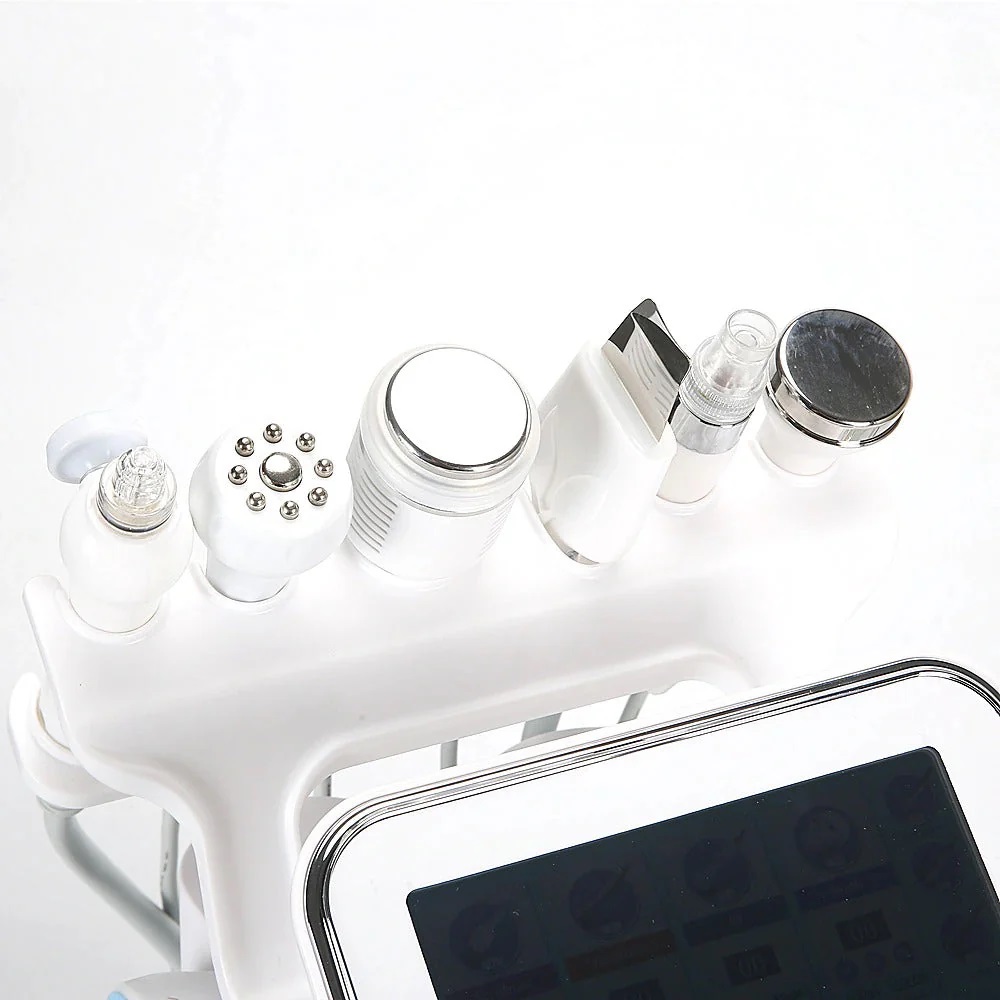
We must break down the technical specifications clearly. Understanding physiological outcomes validates the professional-grade claims of this skin care device. Hardware drives the underlying biological results. Let us explore how each specific probe functions during a session.
The Hydrogen-Oxygen (H2O2) Vacuum Pen acts as the core tool. A professional H2O2 beauty machine highlights over 60Kpa of suction power. This metric matters heavily for extracting stubborn blackheads. It converts purified water into hydrogen-rich molecules. This process allows rapid dermal penetration. The skin absorbs these microscopic molecules easily. It neutralizes free radicals effectively. Next, we use the Ultrasonic Scrubber. It operates at a precise 20KHz frequency. This rapid vibration provides non-abrasive extraction. It clears pores without causing physical trauma. It easily sheds dead skin cells.
The Radio Frequency (RF) Head targets deeper dermal layers. We typically see a 1MHz energy output. Focus on realistic physiological outcomes here. The RF energy creates thermal heat safely. This triggers localized collagen stimulation over time. Practitioners utilize it primarily for the jawline. It works exceptionally well on nasolabial folds. It also effectively reduces under-eye puffiness. You must manage client expectations regarding surgical-level lifting.
The Oxygen Jet Sprayer pushes high-density ion mist into cleared pores. It validates the system's role as a true oxygen beauty machine. The flow rate generally hits 12L per minute. The Cold Hammer serves a critical recovery function. It targets a thermal range of about 41°F (5°C). Cold application immediately constricts facial capillaries. It locks in moisture effectively and seals serums. This process reduces post-extraction erythema or redness. Finally, the 7-Color LED Mask provides the finishing touch. Blue light handles anti-bacterial needs for acne. Red light tackles anti-inflammatory and anti-aging goals.
Hardware represents only half the equation in modern aesthetics. Targeted liquid formulations dictate actual treatment success. You must pair the mechanics with active chemistry. Let us clarify the three primary solutions used globally.
Here is a breakdown of the chemical components:
AS1 (Exfoliation): This liquid contains lactic acid and yeast extracts. Manufacturers formulate it for all skin types. It promotes baseline keratin shedding gently. It also boosts hydration levels naturally. You use this for the initial sweeping pass.
SA2 (Extraction): This formulation features salicylic acid and aloe vera. You must reserve it for oily, acne-prone skin. It specifically targets the T-zone area. The acid works beautifully for dissolving stubborn sebum. It clears out congested pores rapidly.
AO3 (Nourishment): This blend includes Vitamin C, Vitamin E, and aloe. You apply it post-extraction only. It provides high-intensity barrier repair. It also assists in melanin suppression. It leaves the skin glowing and deeply hydrated.
Using the wrong solution causes poor aesthetic results. An operator must select the correct bottle every time. Applying SA2 to dry, sensitive cheeks causes peeling. Applying AS1 to deep blackheads yields weak extractions. You must master this liquid protocol completely.
You need a transparent, time-bound workflow. Operational expertise relies on strict adherence to steps. Below is a professional standard operating procedure. This exact timeline ensures you do not over-treat the skin.
You always begin with manual makeup removal. Perform a thorough primary cleansing first. Use a gentle, foaming cleanser. Ensure the skin is completely free of surface oils.
Spend 5 to 10 minutes on broad sweeping. Use the AS1 solution across the entire face. Keep the probe moving constantly.
Spend 15 to 20 minutes on targeted T-zone vacuuming. Use the SA2 solution for this deep extraction. Focus on the nose and chin. Avoid delicate under-eye areas entirely.
Crucial Warning: Never use RF or Ultrasonic probes on dry skin. You must always apply a conductive gel first. You can also use a targeted, water-based serum. Dry friction causes severe skin damage.
Apply the AO3 solution via the oxygen facial sprayer. Dedicate 2 to 3 minutes to this step. Ensure an even, misted coat over the entire epidermis.
Apply the cold hammer for 2 minutes. Focus on any red or inflamed areas. Follow this directly with the LED light therapy mask. Choose the wavelength matching the client's needs. Leave the mask on for the remaining 8 minutes.
You must build trust by acknowledging technical limitations. Every mechanical hydrafacial device carries inherent operational risks. Understanding these dangers separates professionals from eager amateurs.
The esthetician's warning is absolutely clear. You risk permanent scarring if vacuum pressure sits too high. Broken capillaries occur if you leave the probe stationary. Keep the handpiece moving at all times. Never hover over one spot for more than three seconds.
We must strictly manage treatment cadence. Skin requires time to regenerate. Over-exfoliating ruins the delicate acid mantle. Here is a frequency matrix for safe operation:
Modality Class | Recommended Frequency | Specific Probes Included |
|---|---|---|
High-Frequency | 2–3 times per week | Cold hammer, Oxygen spray, LED mask |
Low-Frequency | 1 time every 15–21 days | RF tightening, Ultrasonic peeling, Vacuum dermabrasion |
We must also outline hard contraindications. Certain individuals must avoid mechanical extraction phases entirely. Do not use this machine if actively using retinoids. Accutane or Tretinoin users have highly fragile skin. Avoid it if you have a compromised skin barrier. Active eczema and severe rosacea rule out treatment. Severe cystic acne requires medical dermatology, not machine extraction. Always conduct a thorough client consultation first.
Buyers need a logical framework before purchasing. You must evaluate different brands and models objectively. Look beyond the flashy marketing brochures. Focus instead on industrial components.
First, check pump durability and suction consistency. Cheaper models lose their Kpa pressure after three months. The motors burn out under commercial strain. You should look for continuous-duty rated pumps. They maintain reliable suction over long operational hours.
Second, review interface and usability. Evaluate 7-inch LCD touchscreens against analog dials. Touchscreens offer clear, modern advantages. They often include pre-set software timers. These timers drastically reduce operator error in commercial settings. They prevent over-treating specific facial zones.
Third, consider consumable and parts availability. Internal hoses eventually clog with debris. External probes degrade over time from sanitization chemicals. Ensure the vendor supplies replacement parts natively. Avoid locked-in proprietary serum contracts unless you specifically desire them. Open-system machines allow you to source your own AS1, SA2, and AO3 solutions.
Here is a quick checklist for evaluating hardware suppliers:
Do they provide comprehensive video training manuals?
Is the internal tubing rated for acidic solutions?
Does the RF probe deliver a true 1MHz output?
Can you easily access and clean the waste liquid container?
A 7-in-1 system permanently alters your service menu. It shifts facial treatments from manual guesswork to a predictable process. This multi-step mechanical and chemical workflow guarantees consistent results. You remove the variability of human hands. You replace it with calibrated suction and targeted frequencies.
You should evaluate your immediate operational needs next. Decide if you are upgrading existing spa equipment. Perhaps you need to train staff on strict new protocols. Alternatively, you might be researching safe at-home usage. Always review specific machine warranties. Check the internal motor specifications before making a final purchase. Ongoing education and protocol adherence drive your ultimate success. Do not cut corners on training.
A: You should use purified water, saline, or specific high-viscosity moisturizing toners. Always avoid thick serums. Heavy, viscous liquids can quickly clog the 12L-flow internal tubing. Stick to water-based formulations for consistent spraying.
A: Generally, 8-in-1 machines include an additional bio-microcurrent massage head. They may also feature a higher total wattage. These units are tailored for larger clinical setups. They suit environments requiring deeper muscle stimulation alongside standard dermal treatments.
A: Yes, provided the operator bypasses the SA2 solution entirely. You must utilize the absolute lowest vacuum pressure. Operators should rely heavily on the AO3 nourishment, oxygen spray, and cold hammer modalities. This approach minimizes mechanical friction.