

Views: 0 Author: Site Editor Publish Time: 2026-04-24 Origin: Site
Medspa operators and clinic owners currently navigate a highly saturated market of aesthetic equipment. Marketing claims frequently outpace clinical reality across numerous manufacturer brochures. Choosing a high-performance Diode Laser Hair Removal Machine requires balancing upfront capital expenditure against long-term reliability. Patient throughput and clinical safety heavily depend on these strategic hardware choices. Premature equipment failure directly impacts your daily revenue and damages clinic reputation.
At the decision stage, platform viability comes down to three operational pillars. You must evaluate generator lifespan, continuous working capacity, and clinical adaptability. We will deconstruct the essential hardware specifications of professional-grade systems. You will learn why component origins and intelligent software integration remain critical. This guide provides a clear, objective framework for your upcoming procurement evaluation.
Hardware Longevity: USA imported laser bars utilizing AuSn (gold-tin) hard soldering technology provide reliable energy output and extend handle lifespan up to 50 million shots.
Operational Uptime: Advanced TEC cooling systems combined with high-flow water pumps eliminate thermal throttling, enabling long working hours (up to 24–36 hours of continuous operation) for high-volume clinics.
Clinical Efficiency: Multi-wavelength integration (755nm, 808nm, 1064nm) allows for safe, effective treatment across all Fitzpatrick skin types (I-VI).
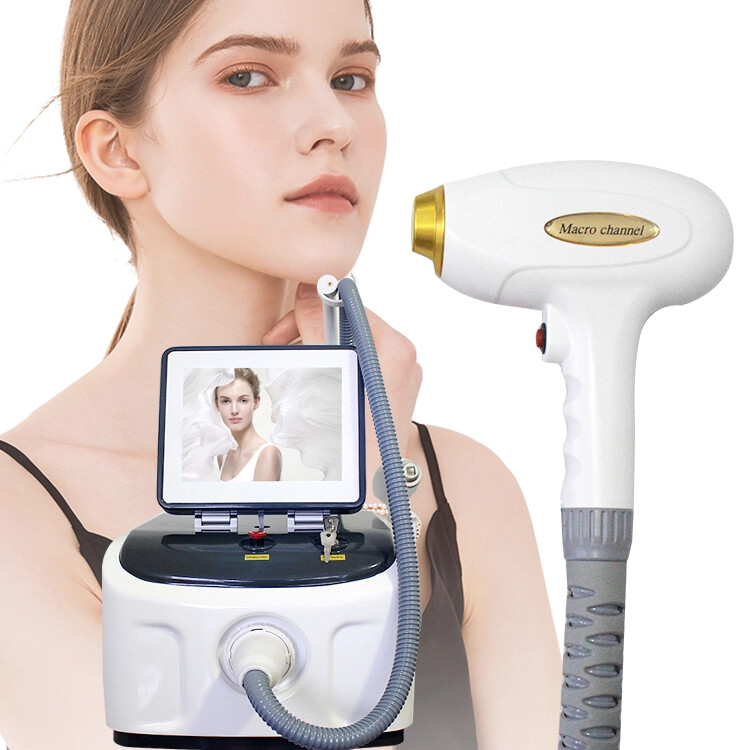
Premature handle failure presents a significant business problem for busy medical spas. Inconsistent energy output leads directly to poor clinical results. Patients notice when their treatments become less effective over time. This inconsistency creates patient dissatisfaction and forces unexpected replacement costs. A dependable light source serves as the absolute foundation of any aesthetic energy device.
We must deconstruct the internal components to understand true hardware value. High-quality USA imported laser bars utilize superior manufacturing techniques. These coherent palladium bars offer distinct structural advantages over cheaper alternatives. The primary differentiator lies in the soldering technology. Premium manufacturers use AuSn (gold-tin) hard soldering. This specific alloy ensures structural integrity under extreme thermal cycling. Standard indium soldering often degrades quickly under constant heating and cooling. Indium suffers from thermal creep, eventually causing the diodes to misalign or burn out.
Industry evidence strongly supports investing in premium components. A properly maintained module realistically supports 20 to 50 million flashes. This longevity ensures a predictable return on investment timeline before you ever need a handle replacement. You can calculate your cost per treatment accurately.
Power configurations directly impact your daily operational speed. Actual output power typically ranges from 1000W to 2000W. Higher wattage allows the machine to deliver necessary energy in shorter pulse durations. Short pulse durations protect the surrounding skin while aggressively targeting the hair follicle. High power also facilitates rapid In-Motion sliding techniques. You can treat larger areas like backs and legs significantly faster. Faster treatments mean you can book more clients per day.
Heat dissipation remains the primary bottleneck for aesthetic lasers. Poor thermal management compromises both patient comfort and machine uptime. When a laser fires, it generates massive amounts of internal heat. If the system cannot remove this heat, the machine will throttle its performance. It may even shut down mid-treatment to protect internal circuitry.
Industrial-grade active cooling architectures solve this problem completely. Advanced units utilize Dual-TEC (Thermoelectric Cooling) or micro-compressors. A high-performance TEC cooling system lowers water temperature rapidly. Engineers design these systems to drop water temperatures by 11°C in under 10 minutes. They maintain highly stable internal temperatures regardless of the ambient room heat.
This internal cooling translates directly to the epidermal patient experience. Sapphire contact cooling channels the chilled water to the applicator tip. The sapphire crystal maintains a surface temperature between 0°C and -5°C. This aggressive cooling provides a genuinely painless experience. Clinics can often bypass messy topical anesthetics entirely. Patients appreciate the comfort, leading to higher retention rates.
Robust thermal management drives a crucial business outcome. It allows the equipment to sustain long working hours without failure. Premium machines operate continuously for 24 to 36 hours. This capability eliminates mandatory "cooldown downtime" during your peak clinic hours. You maximize your daily revenue potential when your machine never forces you to wait.
Supply chain transparency also matters for acoustic comfort. Premium platforms often integrate ultra-silent imported water pumps from countries like Italy. These pumps guarantee high water flow to strip heat away from the diodes. They do so with minimal acoustic disruption. A quiet operating environment maintains the relaxing atmosphere expected in premium aesthetic clinics.
Modern clinics must transition away from single-wavelength limitations. Universal treatment platforms offer much better versatility. A three-wavelength synergy ensures you can treat any patient walking through your door safely. Relying on a single wavelength forces you to turn away certain skin types.
Understanding the physics behind these wavelengths is essential for clinical success. We summarize the three distinct wavelengths below.
Wavelength | Melanin Absorption | Penetration Depth | Optimal Clinical Application |
|---|---|---|---|
755nm | High | Superficial | Light skin tones. Highly effective for fine, superficial hair such as the upper lip or eyebrows. |
808nm / 810nm | Moderate | Deep | The "Gold Standard". Broad applicability across most body areas. Ideal for fast, generalized treatments. |
1064nm | Low | Very Deep | Dark skin tones (Fitzpatrick IV-VI). Avoids epidermal melanin to safely target deep-rooted hair follicles. |
Hardware implementation realities dictate usability. Handpiece weight remains a critical factor for operator health. Technicians often perform back-to-back sessions for eight hours a day. Heavy handles cause severe wrist fatigue and potential repetitive strain injuries. You must emphasize the necessity of lightweight handles during your procurement phase. A handle weighing approximately 300g provides excellent ergonomic relief.
Marketing edge-cases often reveal superior engineering. Evaluate the physical design of the applicator tips. Magnetic interchangeable spot sizes add massive value. Operators can switch from a large body spot to a small precision tip instantly. Specialized facial tips design matters for difficult-to-reach areas. Treating ears, nostrils, and the glabella becomes seamless. You avoid buying entirely separate machines for small treatment zones.
Scalability and security define modern aesthetic businesses. Advanced equipment must actively reduce operator error. It should integrate smoothly into your broader clinic management workflows. Hardware specs mean nothing if the machine remains difficult to operate.
Intelligent user interfaces bridge the gap between complex physics and daily usage. Top-tier machines feature Android-based operating systems. They utilize large 13.3 to 14-inch responsive touchscreens. These smart systems auto-calculate optimal clinical parameters instantly. The operator simply inputs the patient sex, skin type, and treatment area. The software selects the safest starting fluence and pulse duration automatically.
Dual-screen functionality offers another massive leap in usability. Look for OLED screens mounted directly on the handpiece. This screen displays real-time energy, cooling temperature, and shot counts. The operator keeps their visual focus entirely on the patient. They never need to turn their head back to the main console during a delicate procedure.
Software-as-a-Service (SaaS) and IoT business models are transforming equipment ownership. Modern platforms feature secure Wi-Fi connectivity. They include remote rental and management systems. Distributors can lease machines securely to smaller spas. The cloud portal allows parameter locking or unlocking based on payment status. You can monitor daily usage metrics remotely. This connectivity turns a standard laser into a fully managed business asset.
Evaluating long-term operational viability requires looking past the initial purchase price. You must scrutinize the maintenance architecture and regulatory standing of the manufacturer. Unplanned downtime and compliance fines destroy profitability quickly.
Strict adherence to maintenance protocols guarantees component longevity. A 50-million shot lifespan relies heavily on proper water quality. Operators must use pure distilled water exclusively to prevent internal scaling. When evaluating machines, investigate the internal filtration mechanics.
Use the following checklist to evaluate maintenance and compliance factors:
Assess Water Filtration Upgrades: Look for upgraded dual water filtration systems. Older machines require filter changes every single month. Advanced systems extend filter replacement intervals to 6–12 months. This reduces clinic downtime and simplifies your inventory management.
Verify Genuine Medical Clearances: Ensure the manufacturer holds authentic medical certifications. Look for FDA 510(k), Medical CE, and ISO 13485 accreditations. Do not accept basic commercial CE marks as proof of clinical safety. Check the regulatory databases directly.
Evaluate OEM Customization Capabilities: Assess the manufacturer’s ability to align the equipment with your brand. Strong factories provide custom software UI modifications. They can match external shell colors to your clinic decor. Logo integration builds deeper brand consistency for your patients.
Inspect Internal Architecture Videos: Never buy based on exterior photos alone. Request internal layout videos. Check the routing of water tubes and the placement of electrical components. Clean, organized internal wiring indicates higher manufacturing standards.
A professional aesthetic platform is only as strong as its weakest component. Clinics must look past flashy marketing to analyze the internal engineering directly. Making the right procurement choice secures your clinic's profitability and patient safety for years.
Prioritize premium imported laser modules for guaranteed longevity and consistent clinical efficacy.
Insist on robust active cooling architectures to ensure patient comfort and prevent operational downtime.
Demand intelligent user interfaces that reduce human error and protect your patients automatically.
Verify all medical compliance certificates independently to protect your business from regulatory liabilities.
Take direct action before making your final investment. Encourage your purchasing team to request clinical before-and-after data. Ask prospective manufacturing partners for highly detailed component specification sheets. Require video demonstrations proving the cooling speed and interface responsiveness. Thorough vetting guarantees you acquire a true medical-grade asset.
A: With proper distilled water usage and routine filter changes, premium coherent bars are rated for 20 million to 50 million shots. This massive capacity typically translates to 3 to 5 years of heavy, high-volume clinic use before requiring replacement.
A: Dual-TEC or compressor systems actively chill the circulating water. They prevent the internal laser generator from overheating. This robust thermal management allows the machine to run continuously for 24 to 36 hours without mandatory cooldown breaks.
A: Not necessarily. Advanced machines feature a single, lightweight handle. They utilize magnetic, interchangeable spot sizes. You can easily snap on small facial tips for delicate areas or large applicators for broad body zones.
A: Factory-direct manufacturers typically offer a 1 to 2-year warranty or a set shot-count guarantee. They require 3 to 7 business days for standard dispatch. Custom software or logo modifications will require additional production time.


