Views: 0 Author: Site Editor Publish Time: 2026-05-29 Origin: Site
Medspa owners and clinical directors face a recurring capital expenditure dilemma. You must choose between investing heavily in single-purpose lasers or risking an underpowered "all-in-one" device. Single-purpose units require multiple treatment rooms. They also demand high maintenance budgets. Traditional "combo" machines historically lacked sufficient power.
Modern engineering has finally bridged this gap. A properly specified combined aesthetic device now delivers clinical-grade efficacy. It seamlessly handles hair removal, pigment correction, and tattoo removal. You no longer have to compromise clinical results for spatial efficiency.
This guide objectively deconstructs the underlying technology and operational workflows. We also explore the procurement frameworks necessary to evaluate these multi-modality platforms. You will learn how to maximize clinical results while minimizing your hardware footprint. We provide actionable insights for scaling your clinic efficiently.
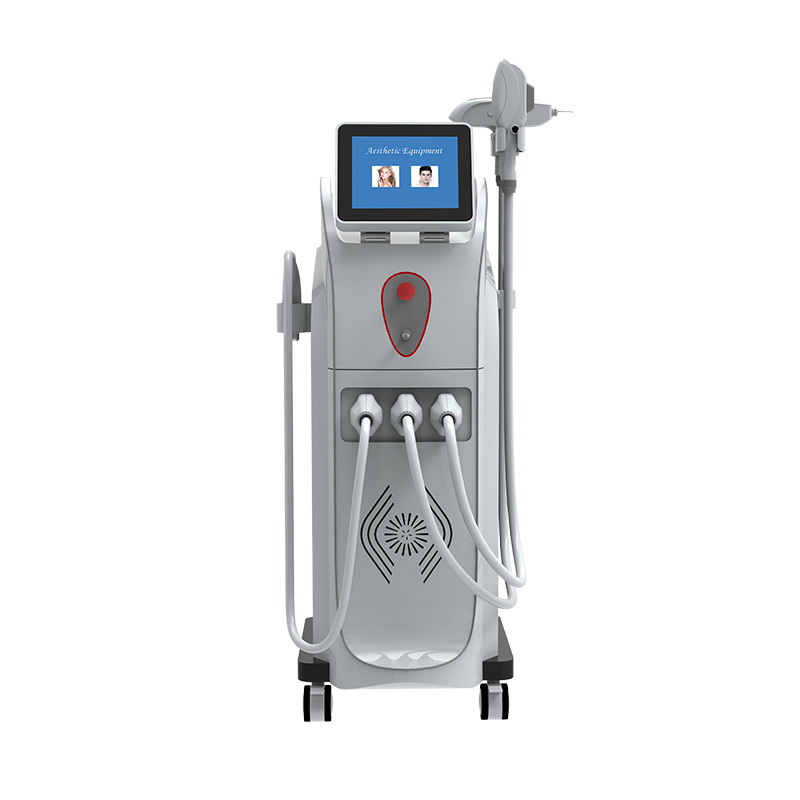
Maximized Utility: Integrating IPL, SHR, and Nd:YAG modalities into three dedicated handles reduces hardware footprint while expanding the clinic's service menu.
Technological Maturation: Features like Optimum Pulsed Technology (OPT) and epidermal refrigeration resolve historical issues with energy spikes and patient discomfort.
Standardized Compliance: Safe deployment requires strict adherence to treatment intervals (21–40 days) and rigorous patient screening (Fitzpatrick typing and medication contraindications).
Procurement Logic: Evaluating these systems requires looking beyond marketing claims to verify consumable lifespan, cooling capacity, and manufacturer training support.
Traditional clinic scaling requires high initial capital. Square footage remains your most expensive asset. Single-function lasers often sit idle during off-peak seasonal demand. An idle laser drains potential profit margins. You need equipment working continuously to maximize hourly revenue generation. Dedicating a single room to one specific treatment artificially caps your growth potential.
A multi-modality platform changes this operational dynamic. It allows clinics to cross-sell bundled packages effortlessly. Imagine offering a carbon peeling facial followed immediately by underarm laser hair removal. You do not need to move the patient. You do not switch rooms. Your practitioners save valuable setup time. This fluid transition enhances the patient experience and increases average ticket value.
This approach also delivers massive CapEx efficiency. Consolidating modalities reduces your upfront equipment investment. You avoid maintaining three separate motherboards. You only service one central cooling system. You negotiate a single service contract. This unified framework drastically cuts operational overhead. It frees up vital capital for localized marketing and staff development.
Understanding a multi-function laser requires examining its distinct physical components. Modern units isolate power delivery to three specific handles. Each handle relies on proven optical physics.
Intense Pulsed Light (IPL) utilizes selective photothermolysis. It targets melanin in pigmentation and hemoglobin in vascular lesions. Traditional IPL often delivers uneven energy. This creates dangerous peak energy spikes. Optimum Pulsed Technology (OPT) resolves this critical flaw.
OPT ensures uniform energy distribution throughout the entire pulse duration. It eliminates sudden thermal spikes. This significantly reduces the risk of epidermal burns. It also prevents post-inflammatory hyperpigmentation (PIH). Thanks to OPT, this handle serves as a highly effective skin rejuvenation machine. It treats vascular lesions, rosacea, and dyschromia safely.
Super Hair Removal represents a paradigm shift in follicle destruction. It employs a specific broad spectrum, typically 640–1200nm. Unlike stamping IPL, an IPL SHR machine uses high-frequency, low-peak-energy pulses.
Clinicians deliver these pulses in continuous motion. We call this the "in-motion" or sliding technique. It builds cumulative heat gently in the dermal matrix. This gradual heating destroys the hair bulge and root. It increases patient comfort dramatically. It also speeds up treatment times for large areas like backs and legs.
The Nd:YAG handle delivers high-intensity photoacoustic energy. It operates primarily at 1064nm and 532nm wavelengths. This handle is specialized for YAG tattoo removal. The energy shatters ink particles into microscopic fragments. The body's lymphatic system then clears these fragments naturally.
Clinicians also use this handle for "Carbon Facials" to stimulate collagen production. Crucially, the 1064nm wavelength has lower melanin absorption. This makes it the safest option for deeper Fitzpatrick skin types (IV–VI).
Handle Type | Primary Wavelengths | Core Mechanism | Primary Applications |
|---|---|---|---|
OPT / IPL | 430nm - 1200nm (varies by filter) | Uniform Photothermolysis | Skin rejuvenation, vascular lesions, pigmentation |
SHR | 640nm - 1200nm | Cumulative Dermal Heating | Painless, rapid hair removal |
Nd:YAG | 1064nm & 532nm | Photoacoustic Shattering | Tattoo removal, carbon facials |
Technology alone does not guarantee clinical success. Consistent operational habits do. Implementing standardized workflows protects your patients and your liability. Below is the standard operating procedure for multi-modality platforms.
Preparation: Begin with thorough skin cleansing. Remove all makeup, lotions, and sunscreens. For hair removal, patients must shave 24 hours prior. Apply a thick layer of conductive cooling gel for light therapies. Use medical-grade carbon paste for Nd:YAG facials.
Modality Selection: Calibrate the pulse width, fluence, and frequency carefully. Base these settings on the target tissue depth and the patient's medical history. Always double-check the Fitzpatrick skin type.
Thermal Monitoring: Observe clinical endpoints actively. Look for perifollicular edema (mild swelling around the hair follicle). Watch for instantaneous frosting during tattoo removal. Do not rely solely on machine presets. Patient skin responses vary widely.
Post-Care Education: Set realistic patient expectations immediately. Explain the biological healing timeline. Provide written instructions detailing restricted activities.
Best Practice: Always perform a patch test on a small, inconspicuous area before treating a new patient. Wait 15 to 20 minutes to observe the localized histamine response.
Common Mistake: Over-relying on default manufacturer settings. Preset parameters serve as a baseline, not a universal rule. You must adjust fluences downward for denser hair or darker skin tones.
Biological cycles dictate aesthetic success. You cannot rush human cellular turnover. For hair removal, schedule 3 to 6 sessions spaced 21 to 40 days apart. This exact timeframe aligns with the anagen (active) hair growth phase. Treating dormant follicles wastes time and money.
Collagen remodeling operates on a different timeline. Immediate tissue contraction is visible within a week due to heat exposure. However, true neocollagenesis follows a slow biological cycle. Peak firming results require 2 to 6 months to materialize fully. Set these long-term expectations during the initial consultation.
Patient panic often stems from poor pre-treatment education. Educate staff and patients thoroughly. Explain that 3 to 5 days of mild erythema (redness) or swelling is normal. It acts as a heat-induced repair signal. It proves the treatment initiated an inflammatory healing cascade.
This normal response is not a burn. It does not require aggressive icing. Aggressive cold application can actually blunt the desired inflammatory response. Guide patients to use soothing, non-occlusive hydration serums instead.
Aesthetic devices deploy massive amounts of targeted energy. Patient safety relies on strict protocols and advanced machine engineering. You must master thermal dynamics and medical contraindications.
Many multi-modality systems integrate bipolar Radio Frequency (RF) with light-based therapies. This combination relies on optical energy creating an impedance gap. The light gently pre-heats the target tissue. The RF energy naturally flows toward this pre-heated, lower-impedance area.
To do this safely, you must protect the skin surface. Advanced epidermal refrigeration keeps the handpiece tip near freezing. This ensures intense heat stays focused deep in the dermis (reaching 45°C–60°C). It completely preserves the delicate epidermal barrier above.
Standardized patient screening is mandatory. You must exclude certain conditions categorically. Do not compromise on safety rules for immediate revenue.
Pregnancy and lactation: Hormonal volatility makes outcomes unpredictable.
Recent UV exposure: Exclude patients with sunburn or heavy tanning within the last 2 to 4 weeks. Active melanocytes increase burn risks exponentially.
Medication conflicts: Avoid treating anyone using photosensitizing medications. Screen for recent anticoagulant therapy (e.g., Hirudin).
Medical devices and history: Patients with implanted pacemakers cannot receive RF treatments. Individuals with a history of severe keloid scarring should avoid deep thermal therapies.
The aesthetic device market features intense marketing noise. Procurement requires looking past superficial shell designs. You must evaluate internal components and vendor support systems carefully.
Flashlamps dictate your long-term profit margins. Evaluate the guaranteed shot count of the xenon lamps inside the handpieces. High-quality systems offer 500,000 shots per handle. If a typical full-body session requires 2,000 shots, a single lamp yields 250 treatments. Calculate this exact operational cost to forecast your break-even point accurately.
For B2B buyers and franchise operators, manufacturer scale matters. Assess the vendor's customization tiers before committing to a fleet purchase.
Basic Customization: Simple casing color changes and handle swaps. Usually delivered in under a week.
Advanced Customization: Custom UI/UX programming. Integration of specific clinical protocols into the software.
Exclusive Customization: Complete turnkey OEM/ODM mold development. This allows franchises to build proprietary, branded hardware ecosystems.
Hardware is useless without clinical confidence. Look for vendors providing a minimum 12-month warranty. Verify they hold accessible replacement parts in domestic warehouses. Most importantly, demand comprehensive clinical training programs. Purchasing a 3 in 1 IPL SHR YAG system is an investment in capability. Vendor-supplied training ensures your staff adopts the technology safely and profitably.
A well-engineered multi-modality system is not a compromise in clinical quality. It is a brilliant consolidation of proven optical physics. It condenses multiple revenue streams into a single, highly profitable footprint. By integrating optimal pulse technology, rapid hair removal, and photoacoustic tattoo clearance, clinics can serve a broader demographic efficiently.
Moving forward, base your procurement shortlists on verifiable specifications. Demand proof of uniform pulse control, strong active cooling capabilities, and high power output. Ignore superficial aesthetic casing features. Prioritize supply chain transparency, exact consumable costs, and rigorous clinical training prior to final purchase.
A: Traditional IPL relies on high-energy, single-shot pulses. These can be painful and slow. An IPL SHR platform uses rapid, repetitive, low-energy pulses combined with a sweeping motion. This gradually heats the hair follicle to a destructive temperature while maximizing patient comfort.
A: Early-generation combos shared a single power supply, causing bottlenecks and failures. Modern clinical-grade units utilize independent power modules for the IPL, laser, and RF components. This specific architecture ensures stable energy output and isolated maintenance.
A: Yes, provided the operator selects the correct handle. The 1064nm Nd:YAG is inherently safe for Fitzpatrick IV-VI skin types. However, the diode or IPL handles are generally restricted to Fitzpatrick I-IV, depending strictly on pulse settings and epidermal cooling capacity.