Views: 147 Author: Site Editor Publish Time: 2026-07-31 Origin: Site
For aesthetic clinics and medspas, balancing equipment footprint and a comprehensive treatment menu is a constant operational challenge. Clinic owners often struggle finding adequate space for multiple standalone devices. They also face mounting pressure to offer diverse, high-demand services to remain competitive.
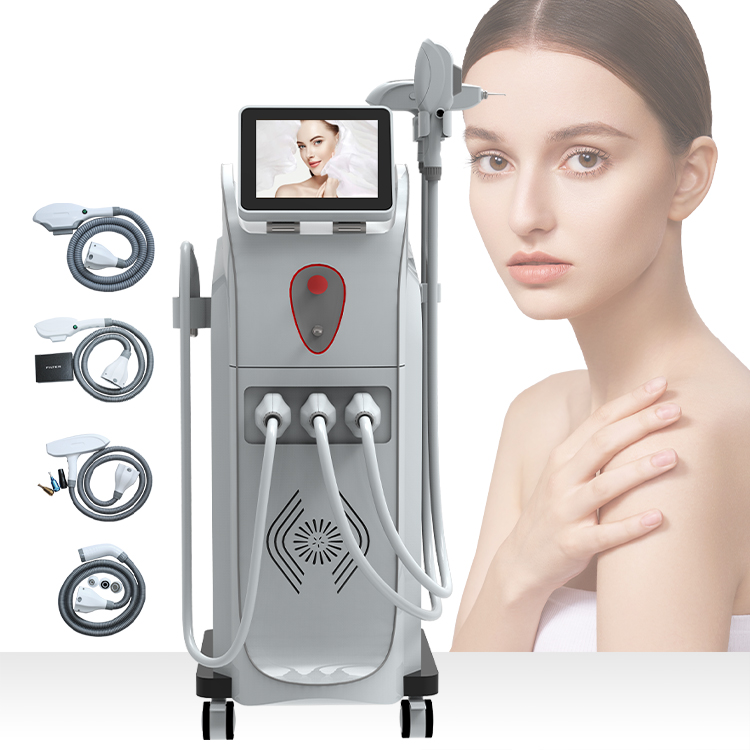
The evolution of the 4 in 1 aesthetic machine offers a consolidated solution. It packages hair removal, skin rejuvenation, tattoo removal, and skin tightening into a single footprint. This integration solves spatial constraints while delivering versatile clinical solutions for growing practices.
However, integrating a combined laser platform requires navigating skepticism around the "jack of all trades" myth. Evaluating these devices requires a strict look at independent power distribution, clinical efficacy mechanisms, and long-term hardware reliability. You will discover exactly how to assess internal engineering and implement effective cross-modality protocols below.
Operational Efficiency: Consolidating SHR E-light, YAG laser, and RF skin tightening maximizes floor space and accelerates ROI by covering 90% of core aesthetic demands.
Clinical Mechanisms: Success relies on four distinct biological triggers: rapid-pulse thermal delivery (SHR), selective photothermolysis (E-light), photoacoustic breakdown (YAG), and targeted thermal resistance (RF).
Engineering Quality: Top-tier platforms mitigate multi-function risks by utilizing independent power supply boards for each modality and advanced cooling systems (e.g., aluminum radiators over copper to prevent xenon lamp degradation).
Implementation Strategy: Maximizing the value of a multi-function beauty machine requires strict adherence to cross-modality treatment intervals and post-care protocols.
Standalone machines for intense pulsed light, diode hair removal, Nd:YAG tattoo removal, and radio frequency require massive upfront capital. They demand significant clinic floor space. They also force owners to manage highly fragmented maintenance schedules across different manufacturers. These logistical hurdles create operational bottlenecks for growing practices.
Historically, practitioners rightfully expressed skepticism toward multi-device units. Early models suffered from the "jack of all trades, master of none" syndrome. These older iterations shared single power boards across multiple handles. This design caused severe underperformance during continuous operation. Modern engineering solves this flaw through dedicated internal power distribution systems. Today, each modality draws energy from its own independent circuit board.
Deploying a consolidated platform drives immediate ROI and seamless scalability. Consider these practical advantages:
Cross-Selling Opportunities: You can effortlessly transition a client from one service to another. Practitioners frequently upgrade hair removal clients to advanced collagen stimulation without changing treatment rooms.
Capital Expenditure Control: You keep equipment budgets manageable. Instead of buying four separate devices, you invest in one robust frame.
High-Margin Expansion: You immediately unlock premium services. Clinics easily add lucrative carbon peeling and multi-color tattoo clearance to their menus.
Best Practice: Always ask manufacturers to demonstrate simultaneous power output capabilities. Request proof of independent power modules before finalizing any purchase.
Modern clinical success stems from utilizing distinct biological triggers. A high-quality multi-modality system executes each function without compromising physiological efficacy.
SHR technology revolutionizes traditional hair reduction through rapid pulse rates. Operators use a continuous sweeping motion over the treatment area. The system sets the laser pulse width shorter than the human body’s pain perception threshold. This precise timing creates a highly comfortable, virtually "painless" patient experience.
Operators must practice strict expectation management. SHR works incredibly well on thick, dark hair. It remains safe for lighter hair types. However, treating lighter follicles realistically requires extended treatment protocols. Light hair lacks dense melanin concentration, demanding more sessions to achieve thermal destruction.
The SHR E-light handle merges intense pulsed light with biostimulating radio frequency. This combination relies on selective photothermolysis. It specifically targets melanin and hemoglobin without damaging surrounding healthy tissue.
Clinics apply this modality using customized wavelength filters. You swap these specific filters to treat distinct concerns. E-Light effectively clears stubborn vascular lesions. It heavily reduces active acne outbreaks. It also lifts superficial pigmentation, restoring an even skin tone efficiently.
A clinical-grade YAG laser generates nanosecond, high-energy pulses. These incredibly fast pulses create a powerful "photoacoustic effect" inside the dermis. This mechanical acoustic wave shatters encapsulated pigment into microscopic particles. The patient's lymphatic system then naturally clears these tiny fragments.
You apply this handle for deep dermal pigment reduction. It serves as the gold standard for multi-color tattoo removal. Furthermore, practitioners utilize it to perform non-ablative carbon laser facials, frequently called Hollywood Peels, for instant pore refinement.
Dermal remodeling requires deep tissue heating. Electromagnetic waves create internal tissue resistance, known clinically as the Joule heat effect. This targeted heating occurs deep within the dermis layer.
The immediate thermal response triggers instant collagen fiber contraction. Over the following weeks, this heat stimulation prompts long-term neocollagenesis. Rely on RF skin tightening to provide non-invasive wrinkle reduction and noticeable facial contouring.
Evaluating internal engineering separates a profitable investment from a maintenance nightmare. External casing tells you very little about actual performance. You must scrutinize the internal architecture.
A true clinical-grade SHR E-light YAG RF platform features segmented power. Look for dedicated internal boards allocating 2000W specifically for SHR and 500W specifically for the YAG module. This strict segmentation prevents severe voltage drops when you switch handles mid-treatment.
Cooling architecture dictates both safety and continuous operation time. Evaluators must look for dual-cooling mechanisms. Effective systems pair Sapphire contact cooling at the tip alongside internal semiconductor chilling. This combination heavily protects the patient's epidermis.
Engineering Tip: Always look for aluminum heat radiators. Copper radiators conduct heat well. However, copper oxidizes rapidly inside closed water lines. This oxidation contaminates the entire system and routinely burns out expensive xenon lamps.
Establish firm baseline expectations for consumable components before buying. Handpiece lifespan drastically impacts your operating margins.
Modality | Expected Lifespan (Shots) | Key Component Considerations |
|---|---|---|
IPL / E-Light | 300,000 - 1,000,000+ | Verify imported xenon lamp quality |
Diode / SHR | 20,000,000+ | Require medical-grade water connectors |
Nd:YAG | 3,000,000 - 5,000,000+ | Check crystal and laser emitter origin |
RF | Virtually Unlimited | Assess handle ergonomics & water cooling |
Whenever you evaluate a standard IPL machine or integrated platform, verify the origin of critical components. Medical-grade connectors and imported xenon lamps ensure consistent energy output.
Mapping comprehensive treatment journeys correctly provides immense business benefits. Patients experience fewer clinic visits while receiving superior, multi-layered results. However, this demands strict clinical oversight.
Cross-modality safety protocols remain non-negotiable. Using multiple handles on the exact same patient requires strict interval management. You cannot stack aggressive therapies blindly.
Common Mistake: Performing vascular E-Light treatments and Nd:YAG pigment sessions on the same day. This stacking guarantees hyperpigmentation or thermal burns. You must stagger these aggressive sessions 2 to 4 weeks apart.
Implement standardized post-care across your entire staff. Combining light and heat-based modalities creates substantial dermal heat retention. Train your team to enforce these exact recovery steps:
Immediate Cooling: Apply cold compresses directly to the treated areas for 15-20 minutes post-session.
24-Hour Thermal Management: Instruct patients to avoid hot showers, saunas, and intense cardiovascular exercise for 48 hours.
Strict UV Avoidance: Require daily application of broad-spectrum SPF 50. Melanocytes remain highly reactive after light therapies.
Barrier Repair: Prescribe ceramide-rich moisturizers to accelerate epidermal healing for 3 to 7 days.
Purchasing a high-end platform represents a major clinical commitment. Build a side-by-side specification matrix to evaluate different manufacturers objectively.
When reviewing the spec matrix, prioritize these clinical parameters:
Wavelength Ranges & Spot Sizes: Look for larger spot sizes. A 12x26mm spot size delivers much faster SHR treatment times across large areas like legs or backs.
Energy Density: Check the Joules per square centimeter (J/cm²). Ensure the device outputs enough peak power to destroy deep follicles.
Pulse Widths: Flexible pulse width controls allow you to treat varying skin types safely.
Modern clinics need robust software and user interface enablers. Seek intuitive touchscreens featuring pre-set skin-type parameters. These smart presets drastically reduce operator error for new staff members.
Look for advanced software features. Some systems include built-in patient record storage. Others feature integrated rental systems. These allow clinic owners to safely lease the multi-function beauty machine by the day or by shot count to independent practitioners.
Finally, demand thorough support and compliance documentation. Secure comprehensive warranty coverage. You must differentiate between the base machine warranty and the handpiece warranties. Insist on verifiable clinical training certification for your entire staff.
The consolidated aesthetic platform acts as a highly effective, revenue-generating cornerstone for modern clinics. It dramatically improves service versatility while keeping physical footprints small. However, this success happens only if the internal engineering supports the heavy demands of multiple high-energy outputs.
Take these actionable next steps before acquiring your next device:
Prioritize manufacturers offering completely transparent component sourcing.
Demand verifiable handpiece lifespans written clearly into your purchasing contract.
Request a teardown spec sheet detailing the internal power supply boards.
Schedule a live clinical demonstration to validate simultaneous power output safely.
A: No. Combining aggressive light-based therapies on the same tissue simultaneously increases the risk of thermal damage. Standard protocols recommend 2 to 6-week intervals depending on the specific sequence and patient skin type. Staggering ensures the epidermis heals fully before absorbing another high-energy pulse.
A: While SHR remains safer for diverse skin types and can treat lighter hair due to lower peak energies and higher cumulative heat, lighter follicles lack melanin. Operators must set realistic expectations. Light hair will require significantly more sessions than dark, coarse hair to achieve permanent reduction.
A: Lifespans vary heavily by modality. RF handles typically have no strict shot limit. IPL or E-Light lamps last roughly 300,000 to 1 million shots. YAG lasers average 3 to 5 million. SHR and Diode handles can exceed 20 million depending entirely on the quality of the internal laser emitter.
A: Yes. In a multi-function aesthetic machine, shared power boards inevitably lead to severe energy fluctuations. Independent power ensures the Nd:YAG gets the high-peak energy required for photoacoustic effects without draining the system during prolonged, high-volume SHR sessions.