Views: 117 Author: Site Editor Publish Time: 2026-08-10 Origin: Site
The non-invasive aesthetic market is saturated with devices promising effortless fitness. Many consumers and clinic owners struggle to differentiate between standard electrical muscle stimulation and clinical-grade electromagnetic power. A true ems body sculpting machine offers a highly effective, dual-action approach. It induces supramaximal muscle contractions while driving metabolic fat disruption simultaneously. However, deceptive marketing often blurs the line between proven science and exaggerated claims.
We will explore the reality behind these advanced systems in this comprehensive guide. You will learn exactly how the technology functions on a biological level. We will define who makes an ideal candidate for treatment and who should avoid it. You will also discover an objective framework for evaluating equipment specifications and performance capabilities. Our goal is to separate clinical truth from industry noise. This clarity ensures you make confident, evidence-based decisions for your personal health journey or your business investments.
Clinical-grade EMS body sculpting relies on HIFEM (High-Intensity Focused Electromagnetic) technology, fundamentally differing from low-voltage surface TENS/EMS units.
Realistic outcomes typically yield a measurable but bounded percentage of muscle hypertrophy and localized fat reduction after a complete treatment protocol.
Equipment evaluation requires scrutinizing specific technical parameters: magnetic wave frequency, Tesla output, cooling systems, and applicator versatility.
Results are not permanent without maintenance; these devices augment active lifestyles but do not replace foundational metabolic health.
The core mechanism of action relies entirely on focused electromagnetic fields. The magnetic waves pass harmlessly through the dermal layers and subcutaneous fat. They penetrate deep into the tissue to interact directly with motor neurons. This differs profoundly from superficial electrical skin patches. Those older systems only manage to twitch the outermost muscle fibers.
Achieving 100% muscle fiber recruitment is scientifically impossible through voluntary exercise. Even elite athletes only recruit around 35 to 50% of their fibers during a maximum heavy lift. The electromagnetic device forces comprehensive engagement, creating what clinicians call supramaximal contractions. This intense biological stress triggers profound structural remodeling. Muscle tissues adapt by increasing their myofibril volume. They grow thicker, denser, and noticeably stronger over time. This remodeling process relies heavily on genuine HIFEM technology to deliver focused energy accurately into target areas like the rectus abdominis or gluteus maximus.
Extreme muscle exertion demands massive amounts of immediate cellular energy. The body responds to this demand by signaling local fat cells to break down rapidly. This intense metabolic crisis causes fat cells to release free fatty acids in overwhelming volumes. The surrounding fat cells cannot handle this localized toxic load. They undergo apoptosis, or programmed cell death. The lymphatic system then clears these dead cells naturally over the following weeks.
A massive performance gap exists between professional equipment and cheap alternatives. A clinical EMSCULPT machine provides deep tissue penetration and sustained energy output. It maintains optimal intensity for a full 30-minute session. Meanwhile, a low-cost, white-label muscle toning device often overheats internally. It fails to penetrate beyond the fat layer and delivers inconsistent energy pulses. Consumers must recognize these functional differences to achieve real, lasting aesthetic changes.
Clinical studies reveal highly consistent patterns across broad patient demographics. Patients generally experience an average 16% increase in localized muscle mass. They also see an average 19% reduction in subcutaneous fat within the treated area. These benchmark numbers reflect outcomes achieved after completing a standard four-session protocol. Results typically peak around two to four weeks post-treatment. They often continue improving for several months as the lymphatic system finishes clearing disrupted fat cells.
Not everyone makes an ideal candidate for this intensive therapy. The prime patient maintains a Body Mass Index (BMI) under 30. They already possess a baseline level of cardiovascular fitness. The technology works exceptionally well for visible contouring rather than massive weight reduction. Thick layers of subcutaneous fat insulate the underlying muscle. This insulation blocks the magnetic waves from reaching the motor neurons effectively. Leaner individuals naturally see much sharper, faster definition.
Trustworthy providers strictly screen their patients before beginning any protocol. You should strictly avoid this procedure if you fall into certain high-risk categories:
Individuals carrying electronic medical devices, such as pacemakers or internal defibrillators.
Patients possessing metal implants located anywhere near the targeted treatment zone.
Women utilizing copper intrauterine devices (IUDs), as strong magnetic fields interfere with the metal.
Anyone suffering from severe hernias, muscle tears, or recent surgical wounds in the targeted region.
Pregnant women, as the electromagnetic impact on fetal development remains unstudied and potentially dangerous.
Marketing teams frequently emphasize the effortless nature of treatments. They highlight how you can build muscle without breaking a sweat. The physical procedure is indeed entirely passive. You lie comfortably on a clinical bed. However, your body's physiological recovery demands highly active participation. Your body clears destroyed fat cells through its natural waste systems. This requires excellent daily hydration. Your muscles rebuild using protein synthesis. You must consume adequate nutrients to fuel this growth. You simply cannot out-sculpt a poor diet or severe dehydration.
Magnetic intensity dictates the actual clinical efficacy of the treatment. Engineers measure this sheer power in a unit called Tesla. Higher Tesla ratings ensure deeper tissue penetration and guarantee significantly stronger muscle contractions. Modern clinical devices typically operate between 2 and 7 Tesla. A low-powered machine merely tickles the epidermis without engaging deep motor units. Variable frequency algorithms play an equally vital role in session design. If a machine fires at a constant repetitive speed, human muscles adapt quickly. They stop responding to the stimulus. Variable programs alternate rapidly between fast tapping motions and deep, sustained muscular holds. This dynamic variance prevents biological adaptation during a 30-minute session. It maximizes both muscular strain and the subsequent metabolic fat response.
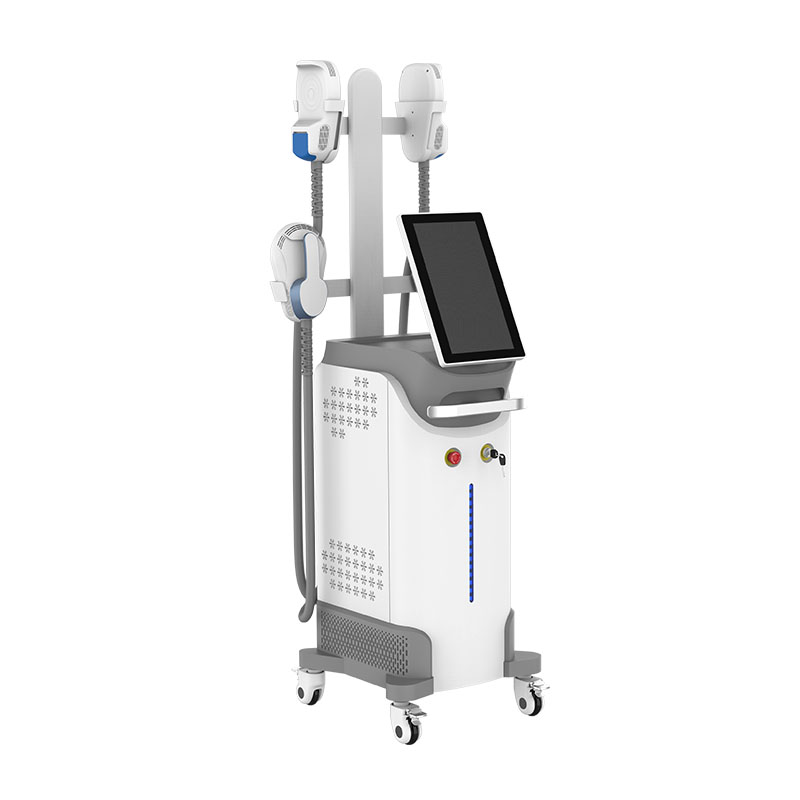
Human body anatomy requires diverse applicator shapes for effective energy transfer. A standard flat handle works perfectly for broad areas like the abdomen and glutes. It covers large surface regions evenly and comfortably. Conversely, curved handles fit securely around cylindrical body parts like the arms and calves. They wrap the limb to target smaller, isolated muscle groups precisely without energy leakage. Clinics must deeply evaluate multi-handle simultaneous operation capabilities. High-end models distribute energy effectively across four independent handles. They can treat multiple muscle groups simultaneously without experiencing power drops. This versatile capability drastically improves clinic workflow efficiency and speeds up patient turnaround times.
High-powered electromagnetic coils generate massive amounts of internal heat during operation. Robust internal cooling systems prevent the machine from melting down or pausing mid-session. Basic consumer units often utilize cheap air cooling. They routinely overheat after one or two back-to-back patient sessions. This limitation forces clinics into prolonged, unprofitable downtime. It also prompts the machine to silently drop its power output, cheating the patient out of a full treatment. Advanced clinical models utilize continuous liquid or water cooling systems. They maintain stable operating temperatures indefinitely. Reliable thermal management protects the expensive internal coils. It ensures sustained treatment efficacy and secures patient safety throughout the entire procedure.
The aesthetic market offers various types of body contouring equipment. Understanding how electromagnetic therapy stacks up against alternative modalities helps clarify clinical purchase decisions and patient recommendations.
Cryolipolysis strictly targets fat reduction through localized freezing. It destroys lipid cells via prolonged, controlled cold exposure. However, it does absolutely nothing for underlying muscle development. Cold therapy often involves uncomfortable pulling or vacuuming sensations. It carries a slight risk of surface nerve pain or paradoxical adipose hyperplasia. In contrast, electromagnetic treatments actively build muscle while burning fat simultaneously. They offer a deep cramping sensation without risking surface nerve damage.
Radiofrequency (RF) utilizes thermal energy to tighten loose skin. It gently heats the dermal layers to stimulate natural collagen production. It reduces superficial fat slightly but ignores structural muscle tissue entirely. Modern aesthetic science now merges these individual concepts. Certain hybrid devices combine electromagnetic muscle targeting directly with RF tissue tightening in a single applicator. The synergistic effect maximizes fat loss while firming loose skin around the newly developed muscle.
Clinics and prospective buyers need a logical framework to choose the right technology. Use the table below to guide patient consultations based on primary aesthetic complaints.
Technology Modality | Primary Mechanism | Best Suited For | Typical Treatment Sensation |
|---|---|---|---|
EMS (HIFEM) | Supramaximal muscle contractions | Muscle hypotrophy, core strengthening | Intense but tolerable deep muscle cramping |
Cryolipolysis | Fat cell freezing (Apoptosis) | Stubborn localized fat pockets | Cold numbing, vacuum pulling |
Radiofrequency (RF) | Thermal collagen stimulation | Skin laxity, mild fat reduction | Warm, hot stone massage sensation |
Hybrid (EMS + RF) | Dual electromagnetic and thermal | Concurrent muscle loss and skin laxity | Intense muscle contractions with deep heat |
Running an electromagnetic machine safely requires thorough anatomical training. Operators must understand exact applicator placement perfectly. Placing paddles directly over skeletal structures causes severe bone discomfort. Misalignment also fails to engage the primary motor nerve effectively. Proper strapping techniques ensure the paddle maintains flush, tight contact with the skin. Secure contact prevents magnetic energy leakage and ensures the patient receives the full therapeutic dose.
The global aesthetic device market floods with unverified, imported equipment constantly. Clinic buyers must prioritize strict regulatory safety over initial price discounts. Look for definitive FDA clearance in the United States or verified CE marks in Europe. These rigorous certifications prove the device underwent extensive clinical testing. Uncertified machines carry massive liability risks for business owners. They often deliver highly unstable magnetic fields. They can potentially harm patients, induce severe burns, or cause sudden electrical fires in the clinic.
High patient satisfaction stems directly from transparent, honest communication. Providers must outline highly realistic timelines before touching a machine. Follow these established best practices for optimal clinical implementation:
Conduct a thorough pre-treatment consultation to screen for medical contraindications and assess the patient's baseline BMI accurately.
Establish consistent baseline photography from multiple angles in a well-lit room to track subtle contour changes over time.
Define the biological timeline clearly, explaining how visible fat reduction takes roughly two to four weeks post-protocol to manifest completely.
Advise patients strictly to maintain adequate hydration and lean protein intake to support heavy muscle recovery and efficient fat clearance.
An ems body sculpting machine represents a scientifically valid tool for targeted body recomposition. It reshapes the human physique safely by forcing deep muscular adaptation and triggering localized fat cell destruction. The dual-action nature of this technology provides results previously impossible to achieve without invasive surgery.
Successful deployment relies entirely on selecting authentic, high-output equipment. Whether you purchase it as a major clinical investment or seek a personal treatment plan, you must verify the magnetic intensity and cooling capabilities. You must respect the physical contraindications carefully to ensure total safety. Maintaining realistic baseline expectations regarding patient candidacy determines the ultimate success rate of the procedure.
To maximize your aesthetic outcomes or clinical success, remember these final action-oriented steps:
Commit strictly to the full recommended session protocol, as partial or interrupted treatments yield minimal biological benefits.
Pair the passive machine treatments with proactive lifestyle habits, focusing heavily on consistent resistance training and lean protein consumption.
Schedule periodic maintenance sessions every three to six months to preserve your new muscle volume indefinitely.
A: The sensation feels intensely rigorous but not painful. It mimics the feeling of a deep, aggressive muscle cramp during a heavy physical workout. Most advanced machines include a specific "tapping" phase in their programmed algorithms. This phase mechanically clears lactic acid from the muscle tissues immediately. It drastically reduces post-treatment soreness, making the overall experience surprisingly tolerable for most individuals.
A: Your artificial muscle mass naturally diminishes over three to six months following the standard biological atrophy timeline. If you stop using the strengthened muscles, they slowly shrink. To prolong your aesthetic results, you need periodic maintenance sessions. Integrating consistent resistance training into your normal weekly fitness routine also helps preserve the structural gains indefinitely.
A: No. You should clearly frame the device as an accelerator for physical contouring, not a systemic weight-loss solution. It actively strengthens your core and reduces stubborn localized fat pockets efficiently. However, it cannot counteract poor nutrition or a completely sedentary lifestyle. True metabolic health always requires a foundational commitment to proper diet and regular cardiovascular activity.
A: Price discrepancies come down directly to internal component quality. High-end clinical devices use true high-intensity focused electromagnetic coils and sophisticated liquid cooling systems. Cheaper alternatives often rely on superficial electrical skin pads. They lack clinical validation and overheat quickly under stress. Investing in verifiable magnetic output guarantees actual physiological changes rather than mere skin twitching.