Views: 0 Author: Site Editor Publish Time: 2026-05-21 Origin: Site
The demand for highly effective, non-surgical skin rejuvenation is growing rapidly. Clinics must balance aggressive clinical efficacy against manageable patient downtime. Striking this balance remains a core challenge for modern aesthetic practices. The 10600nm laser remains the gold standard in dermatology. It vaporizes tissue micro-columns. It leaves surrounding areas completely intact. This controlled process drives deep collagen remodeling. This specific wavelength offers unmatched tightening and textural improvements. We designed this guide to provide clinic owners and practitioners a transparent, evidence-based evaluation framework. You will discover how to evaluate a skin resurfacing machine based on hardware architecture, clinical versatility, and patient safety criteria. Read on to master the technical nuances and maximize your clinical outcomes.
Hardware dictates outcomes: RF-excited tubes and advanced pulse control (UltraPulse) offer superior ablation-to-coagulation ratios compared to legacy continuous-wave glass tubes.
High clinical versatility: Modern machines feature a "3-in-1" architecture (Fractional, Surgical, Gynaecological) to maximize clinic ROI.
Evidence-backed safety: Contrary to common myths, clinical studies confirm that CO2 lasers do not dissolve safely integrated facial fillers (HA/PLLA).
Strict patient selection: Optimal outcomes rely on strict adherence to Fitzpatrick skin typing and comprehensive post-op protocols.
To understand the clinical dominance of this technology, we must examine its fundamental physics. The 10600nm wavelength specifically targets water molecules. Human skin consists largely of water. When the laser energy contacts the skin, it transfers intense heat to these cellular water molecules. They reach a boiling point instantly. The targeted tissue vaporizes in milliseconds. We call this immediate tissue removal ablation.
This process does more than just remove old tissue. It creates microscopic thermal columns. As the laser penetrates, heat spreads outward into the adjacent dermis. Clinical reality shows us an exact biochemical threshold. Collagen denatures at approximately 66.8°C. When structural proteins hit this temperature, the triple helix unwinds. The fibers shrink to one-third of their original length. This immediate structural contraction triggers the primary skin-tightening effect patients desire.
Traditional ablative resurfacing removed the entire epidermis. It carried massive risks and prolonged recovery. The fractional CO2 approach revolutionized this process. It stamps a grid of micro-beams into the skin. It preserves untouched tissue in the interstices between the microscopic wounds. These intact tissue bridges serve as healing reservoirs. They supply healthy cells to accelerate re-epithelialization. This brilliant mechanism minimizes severe complication risks while delivering profound structural rejuvenation.
Not all devices deliver the same clinical results. The internal hardware strictly dictates your outcomes. When assessing a high-end skin resurfacing device, you must inspect the tube technology, pulse control, and safety systems.
The energy source defines device reliability. You will encounter two primary tube technologies in the market.
Feature | RF (Radio Frequency) Tubes | Glass (DC) Tubes |
|---|---|---|
Excitation Method | Radio waves excite the gas mixture. | Direct electrical current excites the gas. |
Beam Quality | Highly stable frequency, precise micro-beams. | Higher volatility, occasionally uneven energy. |
Cooling System | Air-cooled. No internal water required. | Requires fragile internal water-cooling loops. |
Tissue Impact | Narrow thermal damage zones. Faster healing. | Wider thermal spread. Higher risk of prolonged redness. |
RF tubes represent the modern standard. They offer a much longer operational lifespan. They deliver precise pulse delivery. Glass tubes offer a lower upfront barrier. However, their wider thermal damage zones limit their utility in aggressive aesthetic treatments.
You need absolute control over ablation depth and thermal coagulation. Advanced pulse control dictates your clinical versatility.
Ultra-short/High-Peak Power (UltraPulse): This mode delivers massive energy in microsecond bursts. It bypasses the thermal relaxation time of the tissue. It drives deep penetration up to 4mm. It leaves a remarkably narrow thermal damage zone. You need this mode for severe acne scars and thick, fibrotic tissue.
SuperPulse: This offers a balanced ablation-to-coagulation ratio. It typically penetrates up to 1mm. It provides excellent tissue tightening for moderate photoaging.
Continuous Wave (CW): This mode keeps the beam on continuously. It creates a broad thermal spread. You primarily use CW for superficial tissue excision or cutting, as it heavily coagulates blood vessels.
Many clinic owners overlook plume management. Vaporized human tissue creates hazardous laser plumes. These plumes contain cellular debris and potential viral particles. You must verify whether the machine features built-in extraction. If it lacks internal extraction, you must purchase and implement a high-grade external smoke evacuator. Protecting practitioner respiratory health is non-negotiable.
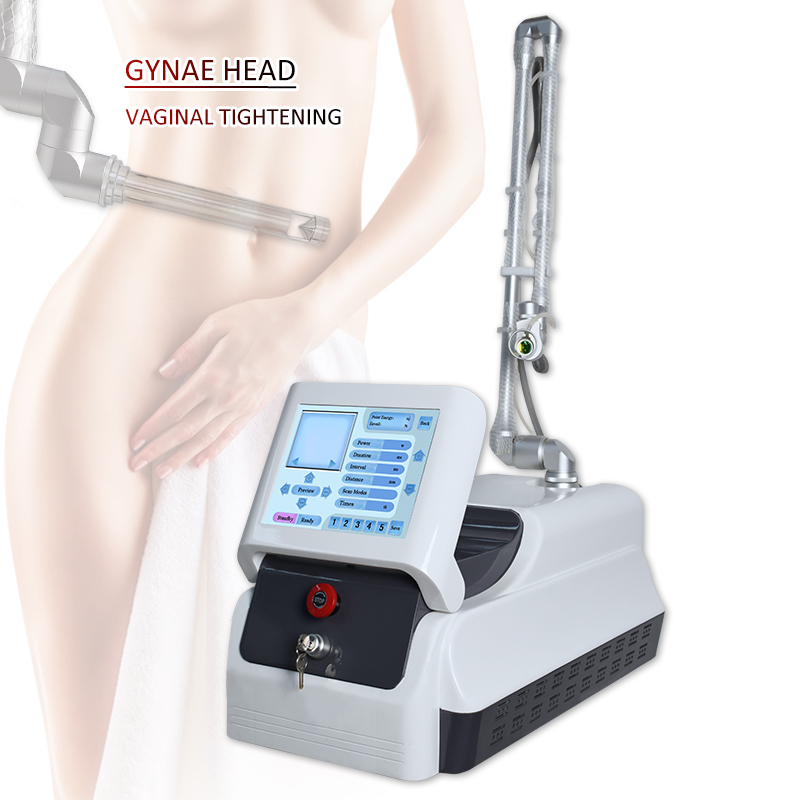
A premium fractional laser functions as a multi-disciplinary workstation. Modern systems utilize a "3-in-1" architectural approach. This versatility dramatically expands your clinical offerings.
This mode handles your core cosmetic dermatology procedures. It excels at treating deep rhytides and advanced photoaging. However, you must apply nuanced strategies for acne scars.
Boxcar Scars: These feature sharp vertical edges. The fractional beam remodels these edges beautifully. You will see excellent efficacy here.
Rolling Scars: These feature wide, undulating depressions tethered by deep fibrous bands. The laser alone cannot lift them. You may require subcision to release the tethers before scanning the surface.
Ice Pick Scars: These narrow, deep tracts plunge far into the dermis. Micro-beams often fail to reach their base effectively. These often need punch excisions prior to full fractional blending.
You can swap the scanning handpiece for a specialized surgical focus lens. This deploys the traditional ablative beam. It allows precise excision of skin tags and benign nevi. You can carefully vaporize syringomas around the delicate eye area. It also serves as the definitive treatment for rhinophyma, allowing practitioners to sculpt away hypertrophic nasal tissue bloodlessly.
Advanced systems include specialized vaginal probes. These probes emit energy in a 360-degree or specialized angular pattern. The thermal effect targets the vaginal mucosa. It drives mucosal tightening and significantly improves natural lubrication. Clinical protocols routinely deploy this mode to address stress urinary incontinence. This non-surgical intervention drastically improves patient quality of life.
Even the most advanced technology fails without strict patient screening. You must establish rigid safety protocols. Careful selection prevents disastrous complications.
Melanocyte activity dictates your complication risks. Identify high-risk demographics early. Patients with Fitzpatrick Skin Types 3 through 6 face dramatically higher risks of post-inflammatory hyperpigmentation (PIH). The intense heat excites their active melanocytes, causing them to deposit excess pigment. For darker skin tones, you must often pivot away from aggressive ablative treatments. Consider deploying an Erbium:YAG or an Nd:YAG system. These alternatives manage thermal heat differently and protect melanocytes better.
Never bypass contraindications. You must screen every patient thoroughly.
Active bacterial or viral infections mandate immediate cancellation.
A documented history of true keloid formation is an absolute contraindication.
Patients must follow a strict medication timeline. You must enforce zero oral isotretinoin (Accutane) usage within the past six months. This medication impairs follicular healing reservoirs, leading to atypical scarring.
A pervasive myth suggests lasers destroy injectables. Patients frequently ask if a CO2 fractional laser will melt their expensive facial fillers. You can confidently rely on peer-reviewed evidence from the NCBI to address this.
Studies confirm treatments are remarkably safe over areas previously treated with volumizing injections. The energy stops at the mid-to-deep dermis. Most modern fillers reside deeper, resting in the sub-dermal or periosteal planes. Safety guidelines establish clear timelines. You can safely treat patients six or more months post-HA injections. You can treat patients 1.4 or more years post-fat transfer. This will not dissolve the filler. It will not cause facial asymmetry. The tissues integrate perfectly.
Your responsibility does not end when the patient leaves the chair. The post-operative phase defines the final aesthetic outcome. You must manage their expectations and their biological recovery aggressively.
Preparation begins a month prior. Mandate strict sun avoidance for four weeks. Tanned skin absorbs energy unpredictably. Screen for a history of Herpes Simplex Virus (HSV). The micro-trauma easily triggers a massive viral outbreak. Prescribe prophylactic antivirals, such as Valacyclovir. The patient must start this medication exactly one day before the procedure.
Patients panic when they do not understand normal recovery stages. Provide them with a transparent, day-by-day roadmap.
Timeframe | Clinical Appearance & Sensation |
|---|---|
Days 1-2 | Intense erythema (redness). Sensation mimics a severe sunburn. Mild to moderate swelling peaks around 48 hours. |
Day 3 | Swelling subsides significantly. Appearance of pinpoint brown crusts (mends) across the grid pattern. Skin feels tight. |
Days 4-6 | Sequential flaking and peeling begins. This usually starts around the highly mobile perioral area, moving to the cheeks and forehead. |
Day 7+ | Re-epithelialization completes. Sloughing reveals pink, fresh, delicate skin. Deep collagen remodeling continues silently for weeks. |
Keep aftercare routines incredibly simple. Discard complex serums loaded with potential allergens. Recommend clinically sound regimens. Instruct patients to mix one teaspoon of plain white vinegar (acetic acid) into one cup of cool water. They should apply this mixture using clean gauze compresses multiple times daily. The acetic acid gently reduces erythema. It acts as a powerful, non-irritating antiseptic. Following the compress, they must apply a thick layer of plain white petrolatum. This traps moisture and provides critical barrier protection until the stratum corneum reforms.
The CO2 laser retains its prestigious position in clinical dermatology for a clear reason. It delivers unparalleled dermal tightening and textural correction. A high-quality device represents a foundational investment for serious aesthetic practices. However, this holds true only if the internal hardware matches the clinic's clinical ambitions. You must prioritize premium RF tubes and precise pulse variability.
Your next steps require strict due diligence. Always verify active FDA registrations. Assess the manufacturer's warranty structures and emergency loaner programs. Finally, demand a live clinical demonstration. Do not just look at the screen interface. Focus heavily on the device's actual ablation-to-coagulation ratio on living tissue. Mastery of these technical criteria guarantees safer treatments and profoundly satisfied patients.
A: The 10600nm wavelength goes deeper. It creates more thermal coagulation, which yields superior skin tightening. The Erbium laser (2940nm) targets water much more aggressively. It ablates tissue with minimal thermal damage. Erbium offers a much faster recovery but proves less effective for deep wrinkles and severe structural laxity.
A: Yes. Verified clinical data shows the procedure remains safe over established injectables. It does not melt hyaluronic acid or fat if you perform the procedure outside the initial integration window. Wait at least six months post-HA injections to ensure complete safety and stability.
A: Treatment frequency depends strictly on the condition's severity. You usually need only 1-2 sessions for mild photoaging or fine lines. Severe acne scarring typically requires a dedicated series of 2-4 treatments. You must space these sessions roughly 6-8 weeks apart to allow complete collagen remodeling.
A: Pricing varies based on practitioner expertise, geography, and treatment depth. As a market anchor, you will typically see prices range from $2,750 to $6,100 per full-face session. This highly customized medical procedure rarely qualifies for insurance coverage unless addressing specific precancerous lesions.