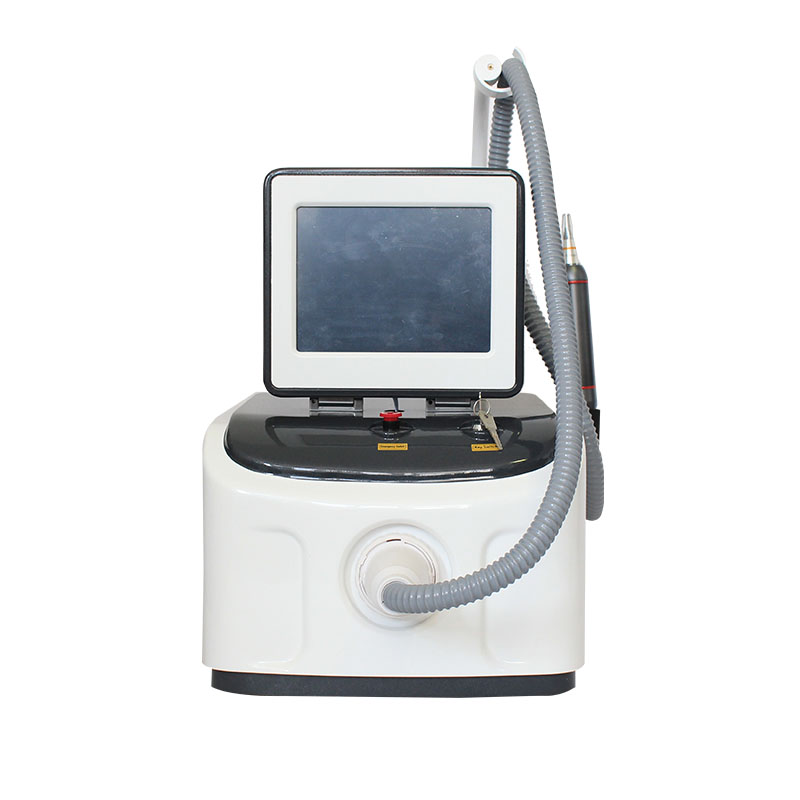
Views: 126 Author: Site Editor Publish Time: 2026-07-18 Origin: Site
Dermatologists and med-spa owners face a harsh commercial reality today. Patients constantly demand faster pigment clearance and drastically less downtime, pushing legacy Q-switched technology to its absolute limits. You simply cannot meet modern clinical expectations using older nanosecond systems. Enter the picosecond laser. This current clinical standard operates at an astonishing one trillionth of a second. Such incredible speed minimizes thermal damage while maximizing pigment destruction deep within the dermis.
Upgrading to a professional picosecond machine requires looking far past basic spec sheets. You must understand exactly how the technology interacts with human tissue. This guide breaks down the essential hardware requirements, multi-wavelength capabilities, and clinical return on investment. You will learn how to properly evaluate and integrate a professional system for advanced tattoo removal and comprehensive skin revitalization.
Mechanism shift: Transitioning from photothermal (heat) to photoacoustic (pressure) technology shatters pigment more efficiently, reducing treatment sessions.
Comprehensive coverage: Multi-wavelength matrices (532nm, 755nm, 1064nm) are essential for clearing stubborn "sunset" tattoo colors and dermal pigmentation.
Dual-revenue potential: Integrated fractional optics (honeycomb lenses) and 1320nm capabilities unlock high-demand, low-downtime skin rejuvenation services.
Hardware integrity: High transmission articulated arms and reliable internal cooling systems are non-negotiable for consistent peak power and machine longevity.
Traditional Q-Switched Nd:YAG machines fall short in modern, fast-paced clinics. They rely heavily on photothermal destruction. This outdated process generates excessive residual heat within the skin layers. Consequently, patients face a much higher risk of permanent scarring and texture changes. They often require ten or more agonizing sessions just to see moderate clearance. You need a better, safer approach to stay competitive.
The picosecond advantage changes everything for practitioners. We see a massive shift from photothermal destruction to photoacoustic damage. Think of the classic "rock to sand" model. A nanosecond laser breaks pigment into small pebbles. In stark contrast, a pico laser tattoo removal system pulverizes those pebbles into microscopic dust or fine sand. The body’s natural lymphatic system clears this microscopic dust rapidly and efficiently.
This biological mechanism translates directly to a massive patient experience upgrade. Ultra-short pulse widths severely limit thermal injury to surrounding healthy tissue. Instead of the intense "rubber-band snap" pain associated with older devices, patients typically report feeling a dull stinging sensation. Keeping the surrounding tissue cool drastically minimizes post-inflammatory hyperpigmentation (PIH) risks, making the procedure far safer across diverse demographics.
You cannot rely on a single wavelength for complex ink or varied natural lesions. A true capability matrix requires multiple targeted options. This vital variety ensures safe pigment removal pico treatments across all Fitzpatrick skin types. Evaluating the wavelength configuration remains the most important step before purchasing.
Wavelength | Target Colors & Issues | Clinical Application & Safety Profile |
|---|---|---|
755nm | Stubborn blue, green inks, and epidermal lesions. | Optimal for hard-to-clear exogenous pigments. Excellent absorption by melanin for superficial spots. |
532nm | "Sunset colors" (red, yellow, orange). | Necessary for bright, warm-toned tattoos. Requires careful application on lighter skin types. |
1064nm | Dark ink (black, dark brown) on deeper skin tones. | The safest choice for Fitzpatrick types IV-VI. Bypasses the epidermis to prevent hypopigmentation. |
Beyond artificial ink, targeting endogenous pigmentation proves highly lucrative. Clinics witness incredible clinical efficacy for treating melasma, nevus of Ota, and persistent age spots. Keep in mind where regulatory claims matter for your region. You must ensure FDA or CE compliance when treating these specific medical conditions. Solid compliance protects your practice, validates your marketing claims, and ultimately builds deep patient trust.
Modern advanced lasers do much more than shatter ink. They serve as a premium skin rejuvenation laser for your aesthetic practice. Fractional and honeycomb-focused technology drives this service expansion. Specialized lens arrays create Laser-Induced Optical Breakdown (LIOB). This sophisticated process causes targeted vacuolization deep inside the dermis. The body responds immediately by stimulating intense collagen and elastin production. Best of all, it achieves structural remodeling without breaking the epidermal barrier. Patients enjoy zero physical downtime.
Next, consider the lucrative carbon peel integration. High-end aesthetic machines include a dedicated 1320nm wavelength designed specifically for "Black Doll" treatments. This popular protocol addresses active acne reduction, refines enlarged pores, and brightens overall skin tone. The laser vaporizes a thin layer of medical-grade carbon lotion, pulling debris from the pores instantly. Patients love the immediate, red-carpet glow.
These specific features create outstanding clinical outcomes. Frame these modalities as high-margin, highly repeatable treatments in your clinic menu. They easily attract patients who feel hesitant about the long, painful recovery times associated with traditional ablative lasers. You can build a steady, loyal clientele just through these non-invasive rejuvenation protocols.
Buying a laser demands rigorous hardware evaluation. You must look under the hood. A dependable pico laser relies on several critical structural components to maintain stability during back-to-back appointments.
Optical Delivery Systems: The articulated guide arm dictates energy stability. We strongly recommend imported 7-joint arms. High-quality arms maintain greater than 95% light transmission. This ensures stable, predictable energy delivery right to the patient's skin surface.
Beam Profile Quality: Never compromise on a "flat-top beam profile". This essential feature ensures perfectly even energy distribution across the entire spot size. It prevents awful tissue splattering and guarantees smooth, uniform aesthetic results.
Peak Power & Pulse Width: Verify peak power specs before authorizing any purchase. Aim for commercial grades hitting 1GW or higher. Lower grades struggle immensely under continuous load. High peak power ensures the machine actually delivers genuine picosecond speeds during a long workday.
Safety & Cooling Infrastructure: Mandatory internal safeguards protect your massive investment. Look for advanced water flow and water level alarms. Maintenance realities are equally important here. You must perform pure water changes every 15 to 20 days. This simple routine protects highly expensive internal optical components from heat damage and rapid calcification.
Clinical return on investment ties directly to treatment speed and overall safety. Fast turnover heavily increases your daily clinic capacity. Compare modern treatment timelines to legacy systems. You can now clear ink in just 3 to 6 sessions, spaced approximately 6 weeks apart. Older technologies demanded 10 or more sessions for similar results. This massive reduction thrills patients and frees up your valuable appointment book.
However, managing contraindications requires total transparency. You must assess clinical risks properly before firing a single pulse. Exercise extreme caution for patients showing acute photosensitivity or active epilepsy. Avoid treating pregnant individuals entirely to maintain safety standards. Furthermore, using improper parameter settings on Fitzpatrick 4-6 skin types invites disaster. Darker skin always requires conservative test spots and careful wavelength selection.
Finally, prioritize staff training and ongoing technical support. Advise your buying team to choose manufacturers or distributors offering comprehensive OEM manuals. You also need dedicated clinical protocol training for new hires. Reliable warranty support for replacement parts keeps your practice running smoothly year-round. Unexpected equipment downtime kills profitability faster than anything else in the aesthetic business.
Investing in professional picosecond technology directly secures superior patient safety and vastly higher clinical throughput for your practice. Successful clinic integration hinges entirely on matching multi-wavelength capabilities to your specific patient demographic. Prioritizing top-tier optical hardware ensures long-term reliability and predictable clinical outcomes.
Take the following steps to upgrade your practice intelligently:
Audit your current tattoo and pigment caseload immediately to identify existing service gaps.
Assess your local demographic to determine if you need heavy 1064nm usage for darker skin types.
Contact shortlisted manufacturers to request their detailed light transmission data.
Demand exact peak power specifications and warranty terms before finalizing any purchase agreement.
A: Modern systems achieve a 2 to 4 times reduction in required treatment sessions. While exact timelines depend on the specific ink type and the patient's natural metabolic rate, most patients reach clearance in just 3 to 6 visits. This drastically outperforms older nanosecond lasers, which often require 10 or more sessions.
A: Yes, they are highly safe when utilizing the 1064nm wavelength. This specific wavelength bypasses the epidermis, protecting melanin-rich skin. However, careful practitioner assessment and conservative energy settings remain absolutely essential to successfully avoid post-inflammatory hyperpigmentation (PIH).
A: Patients experience essentially zero downtime. Specialized honeycomb lenses stimulate collagen below the surface without breaking the outer skin barrier. This contrasts sharply with ablative fractional lasers. Patients might notice minor transient erythema, but this light redness typically subsides within a few hours.
A: Consistent maintenance focuses heavily on the internal cooling system. Clinics must execute pure water cycle changes every 15 to 20 days. Additionally, staff should perform routine probe cleaning and strictly maintain environmental temperature control in the treatment room to protect sensitive internal optics.